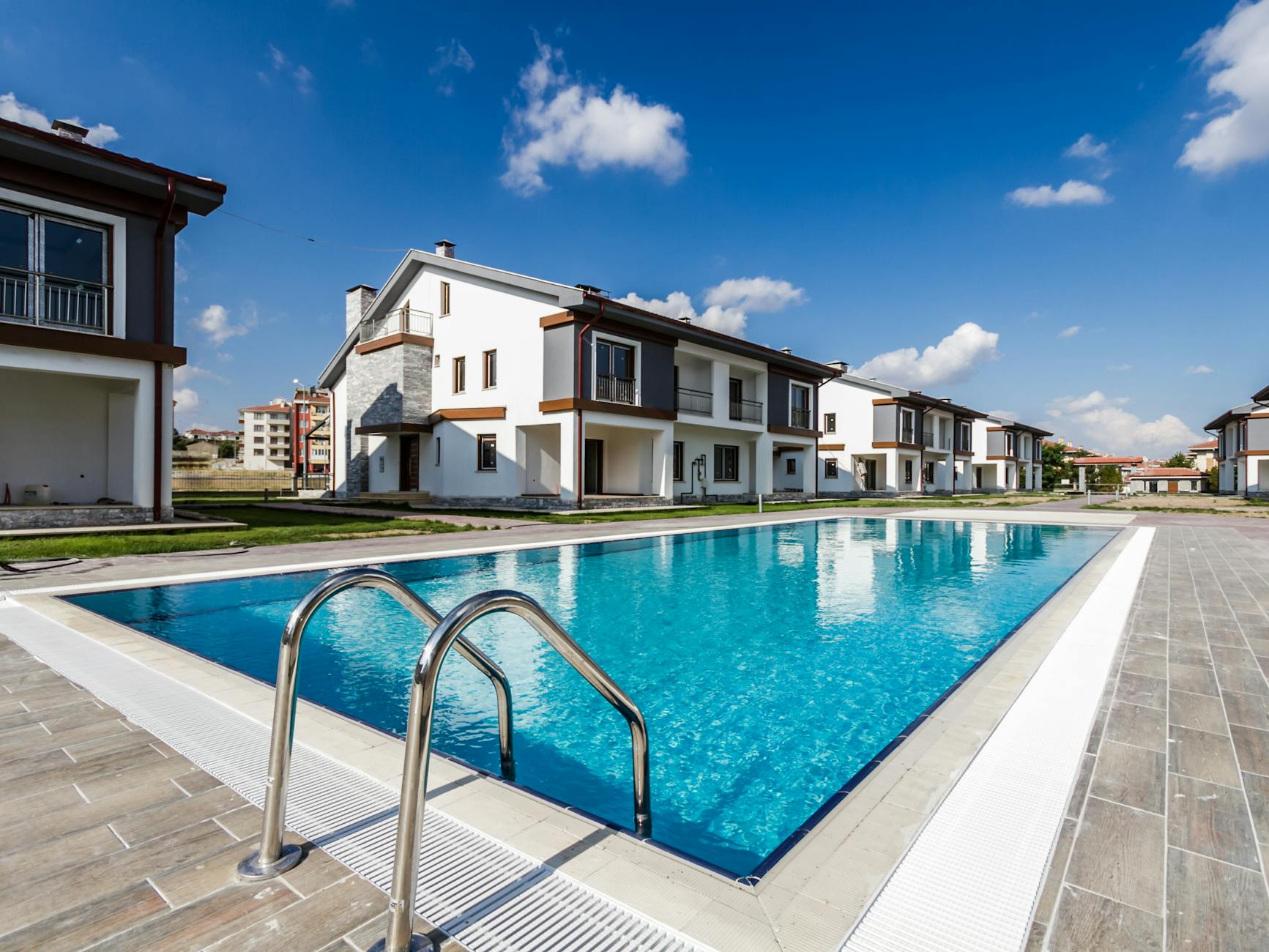
Adding pool home insurance considerations to your planning checklist is essential before breaking ground. A swimming pool transforms your backyard into a personal oasis. However, it also transforms your insurance profile significantly. Most homeowners see their premiums rise by 5% to 10% annually. That translates to roughly $50 to $150 per year in added costs.
Your liability exposure increases dramatically as well. Pools are legally classified as “attractive nuisances.” This means you can be held responsible for injuries to uninvited visitors, including children. In most cases, your existing policy will not automatically adjust to cover a new pool. You must take proactive steps to protect yourself financially before the first shovel hits the dirt.
How Adding Pool Home Insurance Affects Your Coverage
When you install a pool, two major parts of your policy are affected. First, your dwelling coverage may need to increase. An in-ground pool adds $20,000 to $65,000 or more to your property’s replacement cost. Your insurer needs to know this so your home is not underinsured. Second, your personal liability coverage faces far greater exposure. A standard policy includes $100,000 in liability. That is nowhere near enough for a pool owner.
Adding pool home insurance adjustments also affects your medical payments coverage. This portion pays for minor injuries to guests regardless of fault. Typically, it covers $1,000 to $5,000 per person. With a pool, even small slip-and-fall incidents become more likely. Your insurer may also add specific exclusions. For example, diving boards and slides often trigger surcharges or outright coverage denials.
Your “other structures” coverage may come into play as well. Pool houses, cabanas, and fencing are separate structures on your property. As a result, you should verify this coverage limit is adequate. Most policies set it at 10% of your dwelling coverage. That may not be enough if you are building a substantial pool area.
Insurance Steps You Need to Take
The process of adding pool home insurance protection involves several key actions. First, notify your insurer before construction begins. Do not wait until the pool is finished. Many policies contain material change clauses. Failing to disclose a new pool can lead to claim denials or policy cancellation. Some insurers now use satellite imagery to detect undisclosed pools. Getting caught without disclosure is a serious risk.
Here are your essential action items in order. 1) Call your insurance agent at least 30 days before construction starts. 2) Request a coverage review and updated quote. 3) Increase your personal liability to at least $300,000 to $500,000. 4) Purchase a personal umbrella policy of at least $1 million. 5) Confirm your dwelling coverage reflects the new replacement cost. 6) Ask about specific pool-related exclusions in writing.
Keep all permits, contractor agreements, and inspection certificates organized. Your insurer may request proof of code compliance. Typically, you will need to show that fencing, gates, and alarms meet their requirements. Having these documents ready speeds up the underwriting process significantly.
Coverage Adjustments to Consider When Adding Pool Home Insurance
Several specific coverage types need attention when adding pool home insurance protections. The most critical adjustment is liability coverage. The Insurance Information Institute recommends pool owners carry significantly higher limits. An umbrella policy is affordable at just $150 to $300 per year for $1 million in coverage. This protects your assets if a serious injury or drowning claim exceeds your base policy limits.
Here is a breakdown of recommended coverage adjustments:
| Coverage Type | Standard Amount | Recommended With Pool | Estimated Added Cost |
|---|---|---|---|
| Personal Liability | $100,000 | $300,000–$500,000 | $25–$75/year |
| Umbrella Policy | None | $1,000,000+ | $150–$300/year |
| Medical Payments | $1,000/person | $5,000/person | $10–$30/year |
| Dwelling Coverage | Current value | Add pool replacement cost | Varies |
| Other Structures | 10% of dwelling | Verify adequacy | Varies |
In most cases, these combined adjustments add $250 to $500 per year to your total insurance costs. However, the protection they provide is essential. A single pool-related lawsuit can easily exceed $500,000 in damages and legal fees.
How to Save Money During This Transition
Smart planning around adding pool home insurance can reduce your cost increase. Start by installing all required safety features before your insurer inspects the property. A four-sided fence at least four feet high with self-closing, self-latching gates is mandatory. Many insurers offer discounts for additional safety measures. Pool alarms, safety covers, and motion-detecting cameras can lower your surcharge.
Consider choosing an above-ground pool if budget is a concern. Above-ground pools typically add only $50 to $75 per year to premiums. In-ground pools cost $75 to $150 or more annually. The raised walls of above-ground pools provide a partial barrier. However, fencing is still required regardless of pool type. Skipping a diving board or slide also helps. These features trigger surcharges or exclusions from many insurers.
Shop around before committing to your current insurer’s pool surcharge. Get quotes from at least three companies. Bundling your home and auto policies can offset the increase. For example, a multi-policy discount of 10% to 25% may absorb most of the pool surcharge. Also ask about loyalty discounts and claims-free credits. Adding pool home insurance costs vary significantly between carriers.
🏠 Get Free Home Insurance Guides
Free · No spam · Unsubscribe anytime
Common Mistakes to Avoid
The biggest mistake homeowners make with adding pool home insurance is failing to notify their insurer at all. Some assume their existing policy automatically covers a new pool. It does not. If someone is injured in an undisclosed pool, your insurer can deny the entire claim. You would personally owe all medical bills, legal fees, and any court judgment. This can be financially devastating.
Another common error is keeping liability coverage at the default $100,000. This amount is dangerously low for pool owners. Drowning and near-drowning claims regularly exceed $500,000. Typically, attorneys pursue the homeowner’s personal assets once policy limits are exhausted. Skipping an umbrella policy to save $150 per year is a gamble with your financial future.
Many homeowners also neglect ongoing compliance with adding pool home insurance requirements. Fences fall into disrepair. Gate latches break and are not fixed. Pool alarms get disabled because they are annoying. Your insurer can deny a claim if safety features were not maintained. As a result, inspect your pool safety equipment at least twice per year. Keep records of all maintenance and repairs. Finally, never allow unsupervised access to your pool area. Even with insurance, prevention is always the best policy.
Frequently Asked Questions
How much does adding pool home insurance cost per year?
In most cases, expect your premium to increase by 5% to 10%. For an average policy, that means $50 to $150 annually for the pool surcharge alone. However, adding recommended liability and umbrella coverage may bring total added costs to $250 to $500 per year.
Will my home insurance be canceled if I add a pool without telling my insurer?
Yes, this is a real possibility. Insurers use satellite imagery to detect undisclosed pools. If discovered, your policy may be canceled mid-term or non-renewed. Typically, any claims related to the undisclosed pool will be denied entirely.
Does adding pool home insurance require a fence around the pool?
Almost always, yes. Most insurers require a four-sided fence at least four feet high. Self-closing and self-latching gates are also mandatory. For example, Allstate and State Farm both require code-compliant fencing. Failure to install proper fencing can result in coverage denial or policy cancellation.
Compare Home Insurance Rates
Ready to see if you could be paying less for homeowners insurance? Compare quotes from top insurers in your area. Getting multiple quotes is the most effective way to find a better rate.
(paid link)
Official Sources & Resources
For verified information on home insurance regulations and consumer protection:
- NAIC (National Association of Insurance Commissioners): naic.org
- Insurance Information Institute: iii.org
- FEMA (Federal Emergency Management Agency): fema.gov
- FloodSmart (National Flood Insurance Program): floodsmart.gov
- USA.gov — Housing: usa.gov/housing
Content last reviewed April 2026. If you notice any outdated information, please contact us.