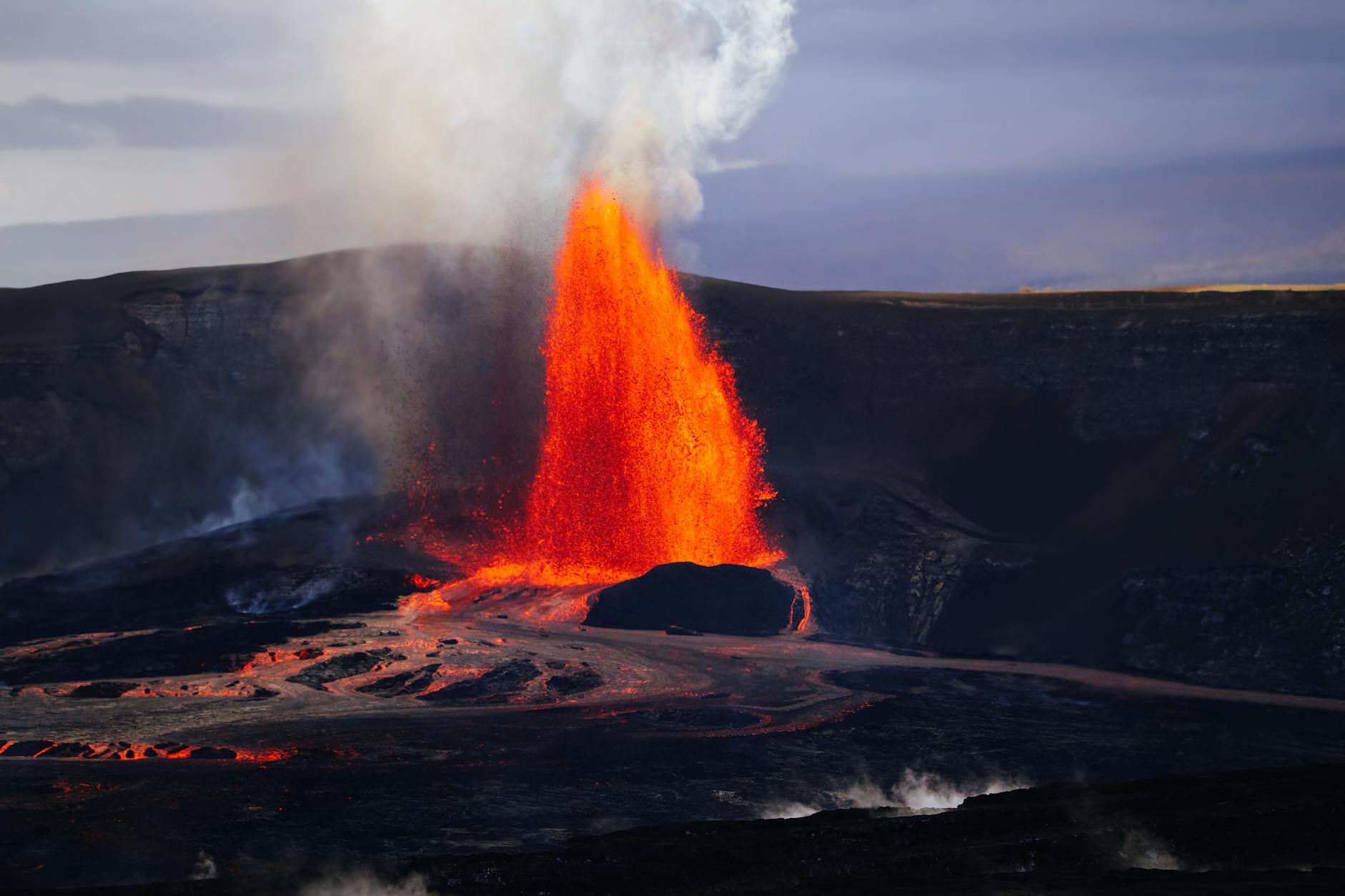
Volcanic area home insurance is essential for homeowners living near any of the 161 potentially active volcanoes in the United States. The U.S. Geological Survey (USGS) classifies 18 of these volcanoes as “very high threat.” Kilauea, Mount St. Helens, and Mount Rainier top the list.
In 2018, Kilauea’s eruption destroyed 716 homes and caused over $800 million in total damage. However, insured losses were shockingly low. The Hawaii Property Insurance Association (HPIA) received just 152 claims totaling $35 million. That gap reveals a critical problem. Many homeowners assume standard coverage is enough. In most cases, it is not. Understanding volcanic area home insurance means knowing exactly what your policy covers and where dangerous gaps exist.
Understanding the Risk: Volcanic Area Home Insurance
Five states face the greatest volcanic threat: Hawaii, Alaska, Washington, Oregon, and California. Alaska alone has over 50 historically active volcanoes. Washington’s Mount Rainier threatens the Seattle-Tacoma metro area with lahar risk. Hawaii’s Lava Zones 1 and 2 see the most frequent volcanic activity. The USGS ranks 39 additional volcanoes as “high threat” beyond the top 18. As a result, millions of Americans live within reach of volcanic hazards.
Historical losses underscore the danger. The 1980 Mount St. Helens eruption caused roughly $1 billion in damage. That figure exceeds $3.5 billion in today’s dollars. It destroyed 200 homes, 47 bridges, and 185 miles of highway. Yet the insurance industry paid only $27 to $31 million in claims. Kilauea’s 2018 eruption displaced 3,000 residents and triggered FEMA disaster declaration DR-4366. Volcanic area home insurance clearly matters in these regions.
Volcanic hazards come in many forms. Lava flows destroy everything in their path. Ashfall can collapse roofs under its weight. Lahars — fast-moving mudflows of volcanic debris — travel dozens of miles from the eruption site. Each hazard requires different coverage. For example, lava and ash damage follow one insurance path. Lahars follow another entirely.
What Standard Homeowners Insurance Covers (and Doesn’t)
Standard HO-3 homeowners insurance does cover volcanic eruption as a named peril. This surprises many homeowners. According to the Insurance Information Institute (III), your policy typically covers lava flow damage to your dwelling. It also covers ash and dust that cause direct physical damage. Airborne shockwaves and fire resulting from eruptions are included too. Personal property damaged by these perils is also covered.
However, significant gaps exist. Earth movement — even when triggered by volcanic activity — is excluded. You need separate earthquake insurance for volcanic quakes. Ash removal costs are not covered unless ash caused direct structural damage first. Gradual ash accumulation damage is also excluded. These limitations make volcanic area home insurance more complex than most homeowners realize.
The biggest coverage gap involves lahars and mudflows. Standard HO-3 policies exclude mudflow entirely. The National Flood Insurance Program (NFIP) covers mudflow under its flood policy definition. NFIP provides up to $250,000 for dwelling coverage and $100,000 for contents. For Pacific Northwest homeowners near Cascade volcanoes, this is critical. Landslides, however, are excluded even from NFIP. A “Difference in Conditions” (DIC) policy from surplus lines insurers can fill that gap.
Additional Coverage Options for Volcanic Area Home Insurance
Building proper volcanic area home insurance requires layering multiple policies. Your standard HO-3 provides the base for lava and ash damage. You then add NFIP flood insurance for lahar and mudflow protection. An earthquake endorsement or standalone policy covers volcanic seismic activity. In high-risk zones, you may need a FAIR Plan or state-specific program. Typically, this layered approach costs more than a single policy but eliminates dangerous gaps.
| Hazard | Standard HO-3 | NFIP Flood Insurance | Earthquake Policy | DIC / Specialty Policy |
|---|---|---|---|---|
| Lava flow damage | Covered | Not applicable | Not applicable | Not applicable |
| Ash / dust (direct damage) | Covered | Not applicable | Not applicable | Not applicable |
| Volcanic fire / explosion | Covered | Not applicable | Not applicable | Not applicable |
| Lahar / mudflow | Excluded | Covered (up to $250K) | Not applicable | Covered |
| Volcanic earthquake | Excluded | Not applicable | Covered | Covered |
| Landslide | Excluded | Excluded | Excluded | Covered |
| Ash removal (no damage) | Excluded | Not applicable | Not applicable | Varies |
Several state-specific programs serve homeowners who cannot find private volcanic area home insurance. The Hawaii Property Insurance Association (HPIA) was created in 1991 for Lava Zones 1 and 2. It offers coverage up to $450,000. The Washington FAIR Plan provides last-resort coverage including volcanic action. Oregon’s FAIR Plan covers volcanic eruption under extended coverage perils. The California Earthquake Authority (CEA) handles volcanic quake coverage in that state.
How Much Does Volcanic Area Home Insurance Cost?
Volcanic area home insurance costs vary dramatically by location and risk zone. Nationally, average homeowners insurance runs about $2,543 per year. Volcanic states often fall below this average. Oregon averages roughly $1,080 annually. Washington comes in around $1,100 to $1,200. Hawaii’s standard HO-3 averages just $382 to $660 — the lowest in the nation. These figures can be misleading, however.
Homeowners in Hawaii’s Lava Zones 1 and 2 face very different costs. HPIA policies for a 1,200-square-foot home average approximately $6,000 per year. That is roughly ten times the standard Hawaii premium. Private insurers simply will not write policies in these high-risk zones. As a result, HPIA serves as the only option. Adding NFIP flood insurance costs an additional $700 to $1,500 per year. Earthquake coverage adds another $200 to $800 depending on the state.
Several factors affect your volcanic area home insurance premium. Distance from active vents matters most. Your USGS lava zone classification (zones 1 through 9) directly influences availability and price. Home construction materials, roof strength, and elevation all play a role. In most cases, homes built with fire-resistant materials and reinforced roofing qualify for lower rates.
🏠 Get Free Home Insurance Guides
Free · No spam · Unsubscribe anytime
How to Reduce Your Risk and Lower Premiums
Structural improvements can lower your volcanic area home insurance costs. Reinforce your roof to withstand ash accumulation. Volcanic ash weighs as much as wet snow and can collapse weak structures. Install HEPA filtration in your HVAC system to prevent ash damage to mechanical equipment. Seal ventilation openings with plastic sheeting during eruption events. Keep gutters clean — volcanic cinders create serious fire risks in clogged gutters.
Insurance preparedness is equally important. Purchase NFIP flood insurance before you need it. There is typically a 30-day waiting period before coverage takes effect. Document your property thoroughly with photos and video for claims purposes. Store important documents in fireproof safes. For example, maintaining a detailed home inventory can speed up the claims process significantly after a volcanic event.
Community-level mitigation also helps. Pierce County, Washington operates a lahar detection system for Mount Rainier. Register for local alert systems like the Hawaii Emergency Management Agency warnings. Establish evacuation plans with multiple routes. Avoid purchasing property in Lava Zones 1 or 2 unless you understand the insurance implications. These steps reduce both your physical risk and your financial exposure.
Frequently Asked Questions
Does standard homeowners insurance cover volcanic eruptions?
Yes, standard HO-3 policies cover volcanic eruption as a named peril. This includes lava flow, ash damage, and volcanic fire. However, lahars, mudflows, and volcanic earthquakes are excluded and require separate policies.
Do I need flood insurance if I live near a volcano?
In most cases, yes. Lahars and volcanic mudflows are only covered under NFIP flood insurance, not your standard homeowners policy. Typically, NFIP provides up to $250,000 in dwelling coverage. This is especially critical for homeowners near Cascade Range volcanoes like Mount Rainier.
What happens if no insurer will cover my home in a volcanic zone?
State programs exist as last-resort options for volcanic area home insurance. Hawaii residents can apply through HPIA for coverage up to $450,000. Washington and Oregon offer FAIR Plans that include volcanic perils. As a result, coverage is available even in the highest-risk zones, though premiums will be significantly higher.
Compare Home Insurance Rates
Ready to see if you could be paying less for homeowners insurance? Compare quotes from top insurers in your area. Getting multiple quotes is the most effective way to find a better rate.
(paid link)
Official Sources & Resources
For verified information on home insurance regulations and consumer protection:
- NAIC (National Association of Insurance Commissioners): naic.org
- Insurance Information Institute: iii.org
- FEMA (Federal Emergency Management Agency): fema.gov
- FloodSmart (National Flood Insurance Program): floodsmart.gov
- USA.gov — Housing: usa.gov/housing
Content last reviewed April 2026. If you notice any outdated information, please contact us.