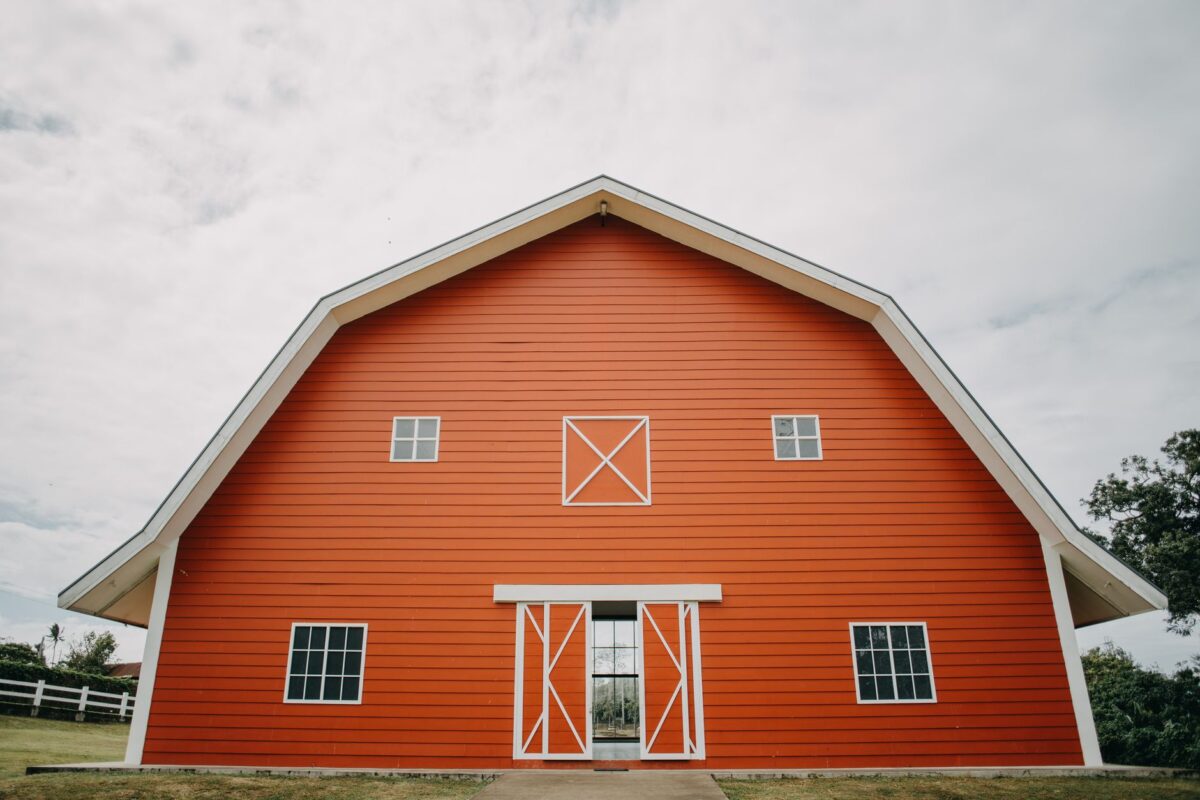
country financial vs american family home insurance is a comparison that almost never comes up in a suburban subdivision. It comes up on a gravel road. It comes up when you own six acres, a pole barn, a detached shop, and a house that a national carrier’s algorithm does not understand. Both of these companies grew out of Midwest farm communities in the 1920s.
- Country Financial Vs American Family Home Insurance: Quick Comparison
- Coverage Options: Country Financial vs American Family
- Rates and Discounts: Country Financial vs American Family
- Claims Process and Customer Service
- Financial Strength and Stability
- Availability: Where Each Company Actually Writes
- Which Home Insurer Should You Choose?
- Frequently Asked Questions
Both still write policies that national insurers either price badly or decline outright. However, they solve the rural problem in different ways. COUNTRY Financial builds around the farm itself. American Family builds around the house and bolts farm coverage on beside it. That difference decides which one fits your property.
Country Financial Vs American Family Home Insurance: Quick Comparison
Here is how the two carriers line up on the numbers that matter most.
| Feature | COUNTRY Financial | American Family |
|---|---|---|
| Average Annual Rate | About $4,715 | About $2,759 |
| AM Best Rating | A+ (Superior) | A (Excellent) |
| J.D. Power Claims Score (2025) | Not rated (too small for the national study) | 680 out of 1,000 |
| NAIC Complaint Ratio | Well below 1.0 (far fewer complaints than expected) | About 0.50 |
| States Available | 19 states | 19 states |
| Bundling Discount | Up to 25% | Up to about 20% |
| Claims Satisfaction | Strong regional reputation, agent-handled | Ranked highly among regional carriers |
| Mobile App Rating | About 4.5 stars | About 4.7 stars |
The rate gap is the headline. American Family’s average premium runs roughly $1,900 less per year. However, that number is misleading for acreage owners. COUNTRY’s average is dragged up by farm-adjacent policies with high outbuilding values baked in. You are not paying $4,715 for a plain three-bedroom ranch.
One thing to settle immediately: these two companies do not share a parent. COUNTRY Financial is COUNTRY Mutual Insurance, based in Bloomington, Illinois, and tied historically to the Illinois Farm Bureau. American Family Mutual Insurance Company S.I. is based in Madison, Wisconsin. People confuse them because both started as farmer mutuals in the same era. They are separate companies with separate underwriting.
Coverage Options: Country Financial vs American Family
The core homeowners policy looks similar at both carriers. You get dwelling, other structures, personal property, loss of use, and liability. Both sell replacement cost on the dwelling. Both offer extended replacement cost, which pays above your limit if rebuild costs spike. For example, this matters when a rural rebuild requires hauling materials 40 miles.
The split shows up in the “other structures” line. On a standard homeowners policy, other structures coverage typically runs 10% of your dwelling limit. On a five-acre property with a 40×60 machine shed, that 10% is not close to enough. COUNTRY Financial handles this by moving you off a homeowners form entirely. Its farmowners policy schedules each building separately at its own value. Barns, grain bins, machine sheds, and fencing get individual limits.
American Family takes a different path in the country financial vs american family home insurance matchup. It keeps you on a homeowners policy and sells a separate Farm & Ranch product alongside it. That product covers outbuildings, barns, stables, farm equipment, and livestock. In most cases you end up with two coordinated policies rather than one. On the other hand, if you only have a detached garage and a small hobby barn, American Family can often just increase the other structures percentage on the homeowners form. That is simpler and cheaper.
Both companies offer the usual endorsements: water backup, equipment breakdown, service line coverage, and identity theft. COUNTRY adds guaranteed replacement cost on qualifying homes. American Family offers a well-regarded diminishing deductible that drops your deductible each claim-free year.
Rates and Discounts: Country Financial vs American Family
American Family is generally the cheaper carrier on a conventional home. COUNTRY Financial is generally more competitive once outbuildings and acreage enter the picture, because it is not surcharging you for risk it does not understand.
| Discount | COUNTRY Financial | American Family |
|---|---|---|
| Multi-Policy / Bundling | Up to 25% | Up to about 20% |
| New or Newer Home | Up to 40% | Available |
| Updated Wiring | Up to 28% | Included in renovation discount |
| New Roof | Up to 20% | Available |
| Alarm / Security System | Up to 15% | Available |
| Safe Heating Source | Up to 15% | Not offered separately |
| Claim-Free History | Available | Available |
| Paperless / Autopay | Available | Available |
COUNTRY’s discount stack is unusually deep for rural homes. The safe heat discount is a good example. Many farmhouses use wood stoves or outdoor wood boilers. Most national carriers surcharge for that or refuse the risk. COUNTRY prices it as a discount when the installation meets code. Typically that single item swings a few hundred dollars a year.
Bundling is where both carriers claw back the most money. COUNTRY’s 25% multi-policy discount is among the strongest available, and it extends to farm, auto, and life. American Family bundles home, auto, and umbrella well too. Before you commit either way, compare auto insurance rates at Car Cover Guide so you know what the auto half is actually worth on the open market. A bundle discount on an overpriced auto policy is not a savings.
Claims Process and Customer Service
Both companies run agent-based models. Neither is a direct-to-consumer app play. You get a local agent, and in rural markets that agent often lives in your county. For example, a COUNTRY agent in central Illinois may handle three generations of the same family farm.
American Family scored 680 out of 1,000 in J.D. Power’s 2025 property claims study, just under the industry average of 682. That is middling on paper. However, it ranks among the stronger regional carriers overall, and its NAIC complaint index of roughly 0.50 means it draws about half the complaints expected for its size. Its app is the better of the two, with mobile claim filing, photo upload, and digital ID cards.
COUNTRY Financial is not scored by J.D. Power in the national home study because its 19-state footprint is too small to qualify. That is not a knock on service. Its NAIC complaint ratio sits well below 1.0, which is genuinely good. On the other hand, you lose the ability to benchmark it against national carriers. In the country financial vs american family home insurance decision, that means you are trusting local reputation over a published score. In rural counties, that reputation is usually easy to check.
Financial Strength and Stability
COUNTRY Financial holds an A+ (Superior) rating from AM Best. American Family holds an A (Excellent). Both are strong. However, A+ is one notch higher, and it reflects COUNTRY’s conservative reserving and long claims history in catastrophe-prone farm states.
Size runs the other direction. American Family is a top-15 U.S. property and casualty group with more than $14 billion in annual premium. It owns Homesite, Midvale, The General, and CONNECT. COUNTRY is much smaller, with roughly $4 billion in premium, and it has stayed a single-brand mutual since 1925. American Family was founded in 1927 in Madison as Farmers Mutual Automobile Insurance Company.
🏠 Get Free Home Insurance Guides
Free · No spam · Unsubscribe anytime
For a homeowner, size mostly affects catastrophe response. American Family can surge adjusters after a derecho or hailstorm. COUNTRY relies on a tighter regional bench, which usually means slower first contact after a widespread event but more continuity afterward. Either way, both carriers have paid through every major Midwest storm cycle in the last two decades.
Availability: Where Each Company Actually Writes
Availability settles the country financial vs american family home insurance question for a lot of readers before coverage ever comes up. Each writes in 19 states, and the lists overlap heavily but not completely.
COUNTRY Financial writes in Alabama, Alaska, Arizona, Colorado, Georgia, Idaho, Illinois, Indiana, Iowa, Kansas, Minnesota, Missouri, Nevada, North Dakota, Oklahoma, Oregon, Tennessee, Washington, and Wisconsin. American Family writes in Arizona, Colorado, Georgia, Idaho, Illinois, Indiana, Iowa, Kansas, Minnesota, Missouri, Nebraska, Nevada, North Dakota, Ohio, Oregon, South Dakota, Utah, Washington, and Wisconsin.
Fifteen states have both. If you are in Nebraska, Ohio, South Dakota, or Utah, only American Family is an option. If you are in Alabama, Alaska, Oklahoma, or Tennessee, only COUNTRY is. Neither writes in California or Florida. So if you are on the coast, this comparison does not apply to you at all.
Which Home Insurer Should You Choose?
Choose COUNTRY Financial if: You have working outbuildings that need individually scheduled limits rather than a 10% blanket. You heat with wood or have an outdoor boiler that other carriers penalize. You own acreage with any agricultural use, even hobby-scale, and want farm and home on one coordinated program. You value the A+ AM Best rating and want the deepest discount stack, including up to 25% for bundling.
Choose American Family if: Your rural property is really a house on land, with a garage and maybe one small barn. You want the lower premium and the better mobile app. You live in Nebraska, Ohio, South Dakota, or Utah, where COUNTRY does not write. You want a published J.D. Power claims score and a large carrier that can surge adjusters after a regional hailstorm.
The honest verdict on country financial vs american family home insurance is that the tipping point is your outbuildings. Add up the replacement cost of every structure that is not your house. If that total exceeds about 15% of your dwelling limit, COUNTRY’s scheduled approach will almost certainly serve you better and may cost less than American Family plus a separate farm policy. Below that threshold, American Family’s cheaper base premium wins.
Get quotes from both if you are in one of the 15 overlap states. Ask each agent to price the outbuildings explicitly, not as a percentage. Whatever you save on the premium is worth parking somewhere useful — you can find bank sign-up bonuses at Bonus Bank Daily and turn a few hundred dollars of annual savings into a little more.
Frequently Asked Questions
Is COUNTRY Financial the same company as Farm Bureau or American Family?
No, all three are separate. COUNTRY Financial has historical ties to the Illinois Farm Bureau but is its own mutual, and American Family is an unrelated Wisconsin mutual. However, people confuse them constantly because all three started as farmer cooperatives in the 1920s.
Will American Family cover my barn and machine shed on a regular homeowners policy?
Only up to the other structures limit, which is typically 10% of your dwelling coverage. For example, a $400,000 home gives you $40,000 for every detached structure combined. In most cases you will need American Family’s separate Farm & Ranch policy for real outbuildings.
Why is COUNTRY Financial’s average rate so much higher than American Family’s?
Its book is weighted toward farm and acreage properties with high scheduled structure values. On the other hand, a comparable house-only quote is often competitive. Typically the averages are not apples to apples, so you should quote both rather than trust the headline number.
Compare More Home Insurance Companies
Looking for more home insurance reviews, comparisons, and state guides? Browse our complete library of insurance resources.
Official Sources & Resources
For verified information on home insurance ratings and regulations:
- AM Best (Financial Strength Ratings): ambest.com
- NAIC (Complaint Ratios): naic.org
- Insurance Information Institute: iii.org
- FEMA (Flood Insurance): fema.gov
- J.D. Power (Customer Satisfaction): jdpower.com
Content last reviewed August 2026. If you notice any outdated information, please contact us.