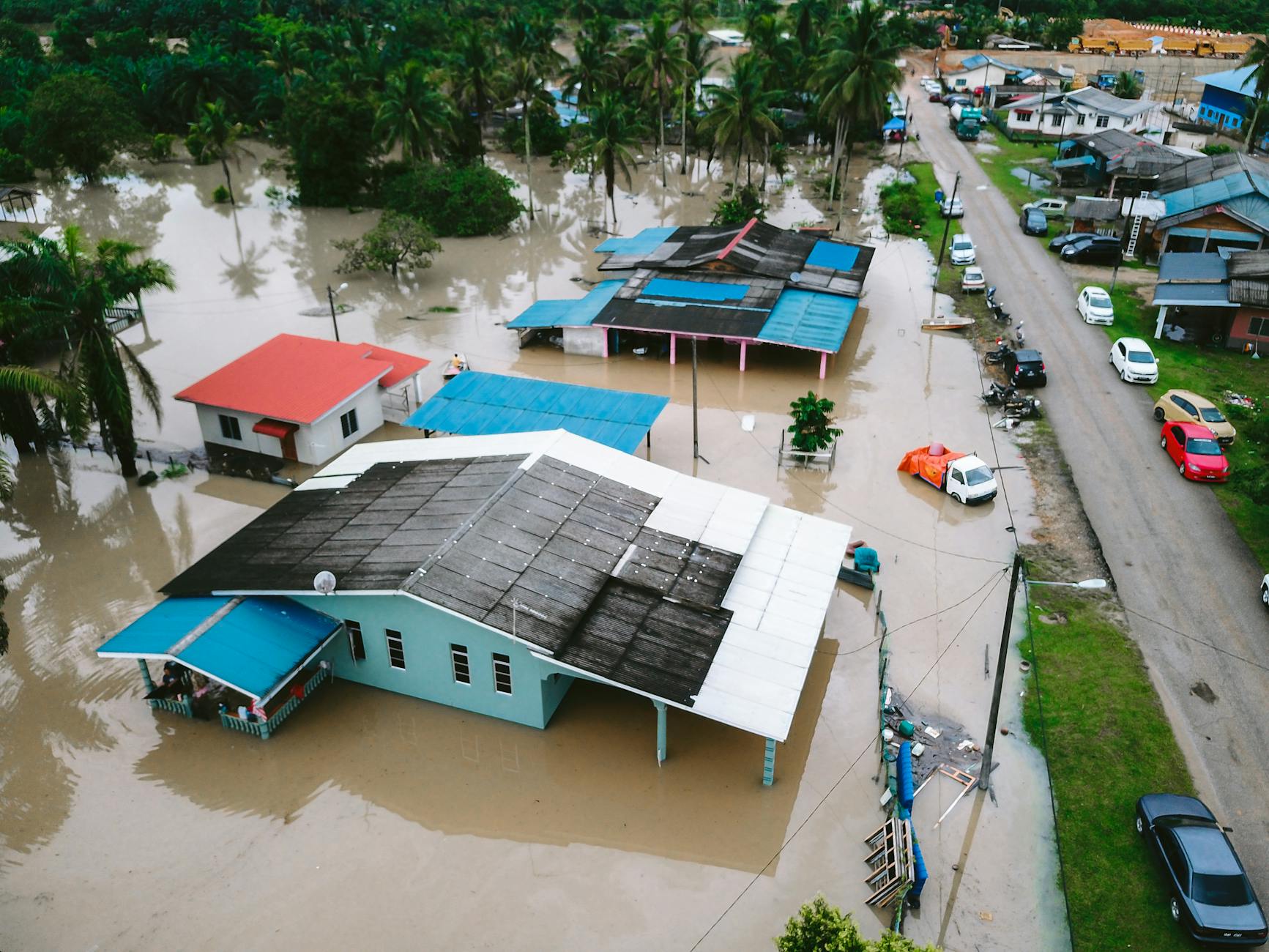
Flood insurance guide — if you own a home in the United States, this is one of the most important resources you will ever read. Flooding is the most common and costly natural disaster in America. Yet standard homeowners insurance does not cover flood damage. Every year, thousands of families learn this the hard way.
- What Is Flood Insurance and Why Does This Flood Insurance Guide Matter?
- Flood Insurance Guide: What’s Covered
- What Flood Insurance Does NOT Cover
- How Much Does Flood Insurance Cost?
- How to Choose the Right Flood Insurance
- Top Insurance Companies for Flood Insurance
- How to Save Money on Flood Insurance
- Flood Insurance Guide by State: Key Differences
- How to File a Flood Insurance Claim
- Common Flood Insurance Mistakes to Avoid
- Frequently Asked Questions About Flood Insurance
- Final Thoughts on Flood Insurance Guide
According to FEMA, just one inch of floodwater can cause more than $25,000 in damage to a home. In 2025, the average NFIP flood insurance policy cost approximately $926 per year — a small price compared to the financial devastation of an uninsured flood. This comprehensive flood insurance guide covers everything you need to know about the National Flood Insurance Program (NFIP), private flood insurance options, coverage details, costs, and how to protect your property in 2026. Whether you live in a high-risk flood zone or a low-risk area, the information in this flood insurance guide will help you make smart, informed decisions about one of the most critical forms of property protection available today.
What Is Flood Insurance and Why Does This Flood Insurance Guide Matter?
Flood insurance is a specialized policy that covers damage caused by flooding. This includes overflow from rivers, storm surge, heavy rain, snowmelt, and blocked drainage systems. Standard homeowners policies specifically exclude flood damage. As a result, you need a separate flood insurance policy to protect your home and belongings. This flood insurance guide exists because most homeowners do not fully understand their flood risk or their coverage options.
The numbers tell a powerful story. According to FEMA, over 40% of NFIP claims come from properties outside high-risk flood zones. That means even “low-risk” homes face real flooding threats. In addition, approximately 13 million properties across the country face substantial flood risk. Climate change is increasing flood frequency and severity every year. This flood insurance guide helps you understand these risks clearly.
Who needs flood insurance? In most cases, anyone with a mortgage on a property in a designated flood zone is required by their lender to carry it. However, even homeowners without a mandate should consider coverage. Over 25% of all flood claims are filed in low-to-moderate risk areas. This flood insurance guide recommends that every homeowner at least evaluate their options. The cost of being uninsured far outweighs the annual premium in nearly every scenario.
Flood Insurance Guide: What’s Covered
Understanding what flood insurance covers is essential. This flood insurance guide breaks down the two main coverage components: building property (dwelling) and personal property (contents). Under the NFIP, dwelling coverage maxes out at $250,000 for residential properties. Contents coverage is capped at $100,000. Private flood insurance carriers, on the other hand, often offer dwelling limits up to $1 million or more.
Building property coverage protects the physical structure of your home. This includes the foundation, electrical and plumbing systems, HVAC equipment, built-in appliances, permanently installed carpeting, and window blinds. It also covers detached garages up to 10% of building coverage under the NFIP. Personal property coverage protects your belongings inside the home. This includes furniture, clothing, electronics, and portable appliances. However, the NFIP pays contents claims at actual cash value — meaning depreciation applies.
| Coverage Component | NFIP Maximum | Private Flood (Typical) | What’s Included |
|---|---|---|---|
| Dwelling / Building | $250,000 | Up to $1M–$10M | Foundation, walls, electrical, plumbing, HVAC, built-in appliances |
| Personal Property / Contents | $100,000 | Up to $500,000+ | Furniture, clothing, electronics, portable appliances |
| Basement Contents | Limited | Varies by carrier | NFIP covers only essential items (furnace, water heater, washer/dryer) |
| Loss of Use / Additional Living Expenses | Not covered | Up to $50,000+ | Hotel, meals, temporary housing while home is repaired |
| Pool Repair / Outdoor Property | Not covered | Optional add-on | Pools, fences, decks, landscaping |
| Replacement Cost on Contents | Not available | Available | Full replacement value without depreciation |
Most importantly, this flood insurance guide emphasizes that private carriers often include loss-of-use coverage. The NFIP does not cover temporary living expenses if your home becomes uninhabitable. For example, if flooding forces you to live in a hotel for two months, the NFIP will not reimburse those costs. Private policies from companies like Neptune Flood and Wright Flood typically include this benefit. This is a significant advantage that this flood insurance guide urges readers to consider carefully.
What Flood Insurance Does NOT Cover
Every flood insurance guide must clearly explain what is excluded. Even comprehensive flood policies have limitations. Understanding these gaps can save you from costly surprises after a disaster. For example, flood insurance does not cover damage caused by moisture, mildew, or mold that you could have prevented. It also excludes damage from earth movement — even if flooding triggered the landslide.
The NFIP has particularly notable exclusions. It does not cover temporary housing costs, currency, precious metals, or stock certificates. It does not cover cars, which require separate comprehensive auto insurance. In addition, water backup from sewers or drains is not covered by flood insurance unless the backup is directly caused by flooding. This is a critical distinction that many homeowners miss.
| Exclusion | Details | Alternative Coverage |
|---|---|---|
| Earth movement / mudslides | Even when caused by flooding | Mudslide/landslide insurance |
| Sewer / drain backup | Unless directly caused by surface flooding | Water backup endorsement |
| Temporary living expenses | NFIP excludes; some private carriers include | Private flood policy or ALE endorsement |
| Vehicles | Cars, motorcycles, ATVs | Comprehensive auto insurance |
| Outdoor property | Fences, patios, pools, landscaping | Select private carriers offer add-ons |
| Preventable mold/mildew | Mold you could have mitigated after flooding | None — mitigation required |
| Financial instruments | Cash, stock certificates, precious metals | Scheduled personal property floater |
This flood insurance guide strongly recommends reviewing your policy exclusions annually. As a result of these gaps, many homeowners pair their flood policy with additional endorsements. For instance, a water backup endorsement on your homeowners policy costs just $30–$70 per year but covers sewer and drain backups that flood insurance excludes.
How Much Does Flood Insurance Cost?
Cost is typically the first question in any flood insurance guide conversation. Under FEMA’s Risk Rating 2.0 pricing methodology, premiums are now based on individual property risk. This replaced the old system that relied heavily on flood zone maps. As a result, rates vary significantly from one home to the next — even within the same neighborhood. The national average NFIP premium is approximately $926 per year as of 2025.
However, your actual cost depends on several factors. These include your property’s distance to a water source, the type of flooding risk, your home’s elevation, the age and construction type of the building, and your chosen deductible and coverage amounts. Homes in high-risk flood zones typically pay $1,200 to $2,800 annually. Properties in moderate-to-low risk zones often pay $300 to $600 per year. This flood insurance guide notes that Risk Rating 2.0 has caused premiums to decrease for some homeowners and increase for others.
| Risk Level | Annual Premium Range | Typical Monthly Cost | Common Locations |
|---|---|---|---|
| Low risk (Zone X / B / C) | $200–$600 | $17–$50 | Inland areas, higher elevations |
| Moderate risk (Zone X shaded) | $400–$900 | $33–$75 | Near rivers, older developments |
| High risk (Zone A / AE) | $900–$2,500 | $75–$208 | Floodplains, riverbanks |
| Coastal high risk (Zone V / VE) | $1,500–$4,500+ | $125–$375+ | Coastal properties, beachfront |
| Preferred Risk (low-risk, eligible) | $200–$400 | $17–$33 | Minimal flood history, elevated homes |
This flood insurance guide also recommends comparing NFIP rates with private flood insurance quotes. Private carriers like Neptune Flood, Palomar, and Hiscox often price 10–30% below NFIP for properties with favorable risk profiles. For example, a home in a moderate-risk zone might pay $700 through the NFIP but only $490 through a private carrier. Always get at least three quotes before choosing a policy.
How to Choose the Right Flood Insurance
Selecting the right policy requires careful evaluation. This flood insurance guide recommends starting with your flood zone designation. You can find your zone on FEMA’s Flood Map Service Center. Once you know your risk level, compare NFIP and private options side by side. In most cases, homeowners should get quotes from both the NFIP (through a participating agent) and at least two private carriers.
Consider coverage limits carefully. If your home is worth more than $250,000, the NFIP’s dwelling cap may leave you underinsured. Private carriers can offer higher limits. In addition, if you have valuable belongings, the NFIP’s $100,000 contents cap with actual cash value payouts might not be sufficient. This flood insurance guide suggests calculating your total replacement cost before selecting limits.
Deductibles also matter significantly. NFIP deductibles range from $1,000 to $10,000 for building coverage. Choosing a higher deductible — for example, $5,000 instead of $1,500 — can lower your annual premium by 15–30%. However, make sure you can afford the out-of-pocket cost if a flood occurs. This flood insurance guide recommends setting aside your deductible amount in an emergency fund.
Finally, review the waiting period. NFIP policies have a standard 30-day waiting period before coverage takes effect. Most private carriers have a shorter waiting period of around 10–14 days. If you are purchasing flood insurance as part of a home purchase, there is no waiting period for either option. This flood insurance guide stresses that you should never wait until a storm is approaching to buy coverage — it will be too late.
Top Insurance Companies for Flood Insurance
This flood insurance guide highlights the best carriers for flood coverage in 2026. The market has expanded significantly, with private flood insurers now representing roughly 35% of the market in states like Florida. Both NFIP-backed and private options have unique strengths depending on your risk profile and coverage needs.
NFIP Write-Your-Own (WYO) carriers: Companies like Allstate, State Farm, Liberty Mutual, USAA, and Progressive sell NFIP policies directly. The coverage terms are identical regardless of which WYO carrier you choose — only the customer service experience differs. USAA consistently ranks highest in customer satisfaction for flood claims among WYO carriers. State Farm and Allstate offer the convenience of bundling your flood policy with your existing homeowners coverage.
Private flood carriers: Neptune Flood, Palomar Insurance, Wright Flood, Hiscox, and Chubb lead the private market. Neptune Flood offers online quotes in minutes and policies starting around $400 per year. Palomar specializes in high-value homes and offers dwelling limits up to $4 million. Chubb provides premium coverage for luxury properties with replacement cost on contents and generous loss-of-use benefits. This flood insurance guide notes that Lemonade has also entered the flood space with a technology-driven approach.
For homeowners looking to maximize savings, this flood insurance guide recommends bundling strategies. You can often save 10–25% by bundling your homeowners and flood policies with the same carrier. In addition, you can compare auto insurance rates at Car Cover Guide and bundle auto plus home coverage for even greater savings. Progressive and Allstate are particularly competitive for multi-policy discounts.
How to Save Money on Flood Insurance
This flood insurance guide offers proven strategies to reduce your premiums without sacrificing essential coverage. With Risk Rating 2.0 now fully implemented, individual property characteristics drive pricing. That means improvements to your specific property can directly lower your rate.
1. Elevate your home. Raising your home above the Base Flood Elevation (BFE) is the single most effective way to reduce premiums. Elevation certificates demonstrating your home sits above BFE can reduce costs by 30–60%. 2. Install flood vents. Engineered flood openings in your foundation allow water to flow through instead of building pressure. FEMA-compliant flood vents can reduce premiums by 15–25%. 3. Increase your deductible. Moving from a $1,000 to a $5,000 deductible can save $200–$500 annually.
4. Shop private carriers. As this flood insurance guide emphasizes, private flood insurance is often 10–30% cheaper than the NFIP for moderate-risk properties. 5. Maintain continuous coverage. Letting your policy lapse and then reinstating it can trigger higher rates. 6. Apply for a Letter of Map Amendment (LOMA). If your property was incorrectly mapped into a high-risk zone, a successful LOMA can reclassify your property and significantly lower your premium.
7. Fill in your basement. Converting a below-grade basement to a crawlspace or slab can reduce risk and premiums. 8. Install a sump pump with battery backup. While this does not directly lower NFIP rates, it reduces your overall risk. 9. Bundle policies. Combining flood with homeowners coverage through the same carrier can save 5–15%. 10. Review your coverage annually. This flood insurance guide recommends re-evaluating your limits and deductibles each year to ensure you are not overpaying for coverage you do not need.
Flood Insurance Guide by State: Key Differences
Flood insurance requirements and costs vary dramatically by state. This flood insurance guide highlights the most significant regional differences. For a detailed breakdown, visit our 50-state flood insurance comparison page. States like Florida, Louisiana, and Texas have the highest number of NFIP policies and typically the highest premiums due to hurricane and storm surge exposure.
Florida leads the nation with over 1.7 million NFIP policies in force. The average annual premium in Florida ranges from $700 to $1,400 depending on the county and flood zone. Louisiana follows closely, with average premiums between $700 and $1,100. Texas, particularly along the Gulf Coast, sees averages of $600 to $1,200. Homeowners in hurricane zones face the highest combined costs when factoring in both windstorm and flood coverage.
In contrast, states like Montana, Idaho, Wyoming, and Utah have far fewer policies and much lower premiums — often under $400 per year. However, this flood insurance guide cautions that low-cost states are not risk-free. Flash flooding, snowmelt, and dam failures can strike anywhere. For example, Vermont experienced devastating floods in 2023 that destroyed hundreds of homes in areas many residents considered safe. Our state-by-state guides provide detailed coverage recommendations for your specific location.
Some states also have unique flood insurance programs. For example, California operates the California Earthquake Authority but does not have a state flood program — homeowners rely on the NFIP or private carriers. Florida’s Citizens Property Insurance Corporation provides wind coverage but refers flood coverage to the NFIP. Explore all high-risk area guides for regional strategies. In addition, homeowners in wildfire zones should be aware that post-fire landscapes dramatically increase flood risk for 2–5 years following a burn.
How to File a Flood Insurance Claim
Knowing how to file a claim is a critical part of any flood insurance guide. When flooding damages your home, acting quickly and documenting thoroughly can make the difference between a fair payout and a frustrating denial. The NFIP requires policyholders to file claims within 60 days of the flood event. Private carriers may have different deadlines — typically 30 to 90 days.
Step 1: Contact your insurance agent or carrier immediately. Report the damage as soon as it is safe to do so. Your carrier will assign an adjuster, typically within 24–48 hours. Step 2: Document everything. Take photos and videos of all damage before cleaning up or making repairs. Photograph each room, damaged items, water lines on walls, and structural damage. Save damaged items for the adjuster to inspect when possible.
Step 3: Create a detailed inventory. List all damaged or destroyed items with descriptions, approximate purchase dates, and estimated values. Receipts help but are not required. Step 4: Make emergency repairs. You can take reasonable steps to prevent further damage — such as tarping a damaged roof or removing standing water. Keep all receipts for emergency repairs. These costs are typically reimbursable under your policy.
Step 5: Meet with the adjuster. Be present during the adjuster’s inspection. Walk through the damage together and point out all affected areas. Step 6: Review and negotiate. Once you receive the adjuster’s estimate, review it carefully. If you believe the amount is too low, you can request a re-inspection, provide your own contractor estimates, or file an appeal. The average NFIP flood claim payout is approximately $52,000, though amounts vary widely. This flood insurance guide recommends hiring a public adjuster for claims exceeding $25,000 if you feel the initial offer is insufficient.
Common Flood Insurance Mistakes to Avoid
This flood insurance guide identifies the most costly errors homeowners make. Avoiding these mistakes can save you thousands of dollars and significant frustration when disaster strikes.
1. Assuming homeowners insurance covers floods. It does not. This is the single most dangerous misconception. Standard homeowners policies explicitly exclude flood damage. 2. Waiting until storm season to buy coverage. The NFIP has a 30-day waiting period. If a hurricane is approaching, it is already too late. 3. Only insuring the building, not contents. Many policyholders skip contents coverage to save money. However, replacing furniture, electronics, and clothing after a flood easily costs $15,000 to $50,000 or more.
4. Not understanding your flood zone. Your flood zone designation directly impacts your premium and coverage requirements. Check FEMA’s map regularly — zones are updated. 5. Choosing the minimum coverage to satisfy your lender. Your mortgage company requires flood insurance, but the minimum they require may not be enough to rebuild your home. This flood insurance guide recommends coverage equal to your home’s replacement cost, up to policy limits.
6. Ignoring private flood insurance options. The NFIP is not your only choice. Private carriers often offer better coverage at competitive prices. 7. Failing to get an Elevation Certificate. This document can significantly reduce your premium if your home sits above the Base Flood Elevation. 8. Letting your policy lapse. Gaps in coverage can result in higher premiums when you reinstate and leave you exposed during the lapse. This flood insurance guide recommends setting up automatic payments to prevent accidental cancellation.
Frequently Asked Questions About Flood Insurance
Is flood insurance required by law?
Flood insurance is not required by state or federal law for all homeowners. However, if you have a federally backed mortgage and your property is in a high-risk flood zone (Zone A or V), your lender will require it. Even without a mandate, this flood insurance guide strongly recommends carrying coverage. Approximately 25–30% of all NFIP claims come from outside high-risk zones.
How much flood insurance do I need?
This flood insurance guide recommends insuring your home for its full replacement cost, up to policy limits. For the NFIP, the maximum is $250,000 for dwelling and $100,000 for contents. If your home is worth more, consider a private carrier with higher limits. Review your coverage annually and adjust as home values change.
Does flood insurance cover basement flooding?
NFIP coverage for basements is very limited. It covers structural elements (foundation walls, staircases), essential equipment (furnaces, water heaters, circuit breakers), and large appliances (washers, dryers) in the basement. It does not cover finished walls, flooring, or personal belongings stored in basements. Private flood carriers may offer broader basement coverage.
What is the difference between NFIP and private flood insurance?
The NFIP is a federal program administered by FEMA with standardized coverage and rates. Private flood insurance is offered by private companies with more flexible coverage options, potentially higher limits, and competitive pricing. This flood insurance guide notes that private policies often include benefits the NFIP excludes — such as loss of use and replacement cost on contents. However, not all lenders accept private flood policies, so verify with your mortgage company first.
Can I get flood insurance if I’m not in a flood zone?
Yes. Any homeowner can purchase flood insurance regardless of their flood zone designation. In fact, this flood insurance guide encourages it. Properties in low-risk zones qualify for lower-cost policies — sometimes as low as $200–$400 per year through the NFIP. Given that over 40% of NFIP claims come from outside high-risk zones, the investment is well worth considering.
How long does it take to get a flood insurance payout?
Under the NFIP, the claims process typically takes 30–60 days from the time you file. However, after major disasters, processing times can extend to 90 days or longer due to high claim volumes. Private carriers often process claims faster — some within 14–30 days. This flood insurance guide recommends documenting damage immediately and thoroughly to speed up the process. Having an inventory of your belongings prepared before a disaster strikes can also accelerate your claim significantly.
Final Thoughts on Flood Insurance Guide
This flood insurance guide has covered every essential aspect of protecting your home from flood damage in 2026. From understanding NFIP coverage limits and Risk Rating 2.0 pricing to exploring private carrier options and claim filing procedures, you now have the knowledge to make informed decisions. The most important takeaway from this flood insurance guide is simple: do not wait. Flooding can happen anywhere, at any time, and standard homeowners insurance will not protect you.
Take action today. Check your flood zone at FEMA’s Flood Map Service Center. Get quotes from both the NFIP and private carriers. Review your current coverage limits against your home’s replacement cost. Consider the money-saving strategies outlined in this flood insurance guide — especially elevation improvements and higher deductibles. Visit our complete library of flood and disaster guides for additional resources on every aspect of flood preparedness and recovery.
Most importantly, remember that flood insurance is not just a financial product — it is peace of mind. Every dollar you invest in coverage is a dollar you will not have to worry about when floodwaters rise. This flood insurance guide will be updated regularly as NFIP rates, private market options, and federal policies evolve. Bookmark this page and revisit it annually to ensure your coverage keeps pace with your needs and your risk.
Compare Home Insurance Rates
Ready to see if you could be paying less for homeowners insurance? Compare quotes from top insurers in your area. Getting multiple quotes is the most effective way to find a better rate.
(paid link)
Official Sources & Resources
For verified information on home insurance regulations and consumer protection:
- NAIC (National Association of Insurance Commissioners): naic.org
- Insurance Information Institute: iii.org
- FEMA (Federal Emergency Management Agency): fema.gov
- FloodSmart (National Flood Insurance Program): floodsmart.gov
- USA.gov — Housing: usa.gov/housing
Content last reviewed April 2026. If you notice any outdated information, please contact us.