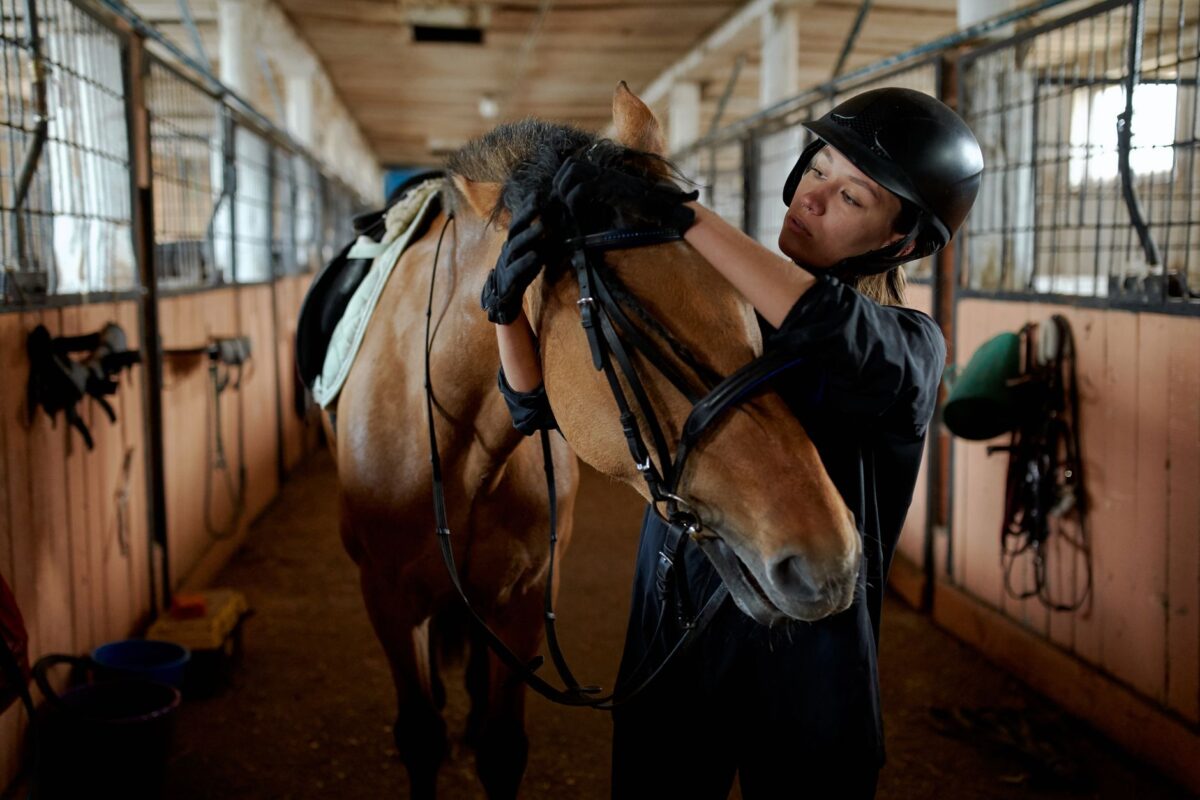
Horse owner liability insurance covers what happens when your horse hurts someone or damages property. A spooked gelding can knock a visitor down in seconds. A loose mare can wander onto a road and cause a collision. In those moments, the horse owner is the one named in the claim.
Medical bills, lost wages and legal defense costs follow. Most owners assume their homeowners policy handles it. However, that assumption is wrong more often than not. Standard homeowners forms treat horses very differently from dogs and cats. This guide explains how the coverage actually responds, what gets excluded, and what a serious equine claim can cost.
What “Horse Owner Liability Insurance” Really Means
Horse owner liability insurance pays for bodily injury or property damage your horse causes to other people. It is third-party coverage. It does not pay your own vet bills or replace the horse itself. That is mortality and major medical insurance, which is a separate product entirely.
The coverage typically comes in three forms. First, a homeowners or farm policy that includes horses kept for personal pleasure. Second, a personal equine liability endorsement added to that policy. Third, a standalone private horse owner policy from an equine specialist such as Markel or Equisure. In most cases, boarders and owners who keep horses off their own land need the second or third option.
This coverage matters to more people than just competitors. Trail riders, backyard owners, lesson parents and people who lease a horse all carry exposure. As a result, insurers underwrite based on use, not just ownership.
How Homeowners Insurance Responds
A homeowners or renters policy pays animal liability claims under Coverage E, the personal liability section. Coverage F, medical payments to others, pays smaller injury bills without any finding of fault. That is the same structure that handles dog bites. Dog bite liability is paid under Coverage E, and the medical payments limit is usually $1,000 to $5,000.
Horses are where the two paths split. Many homeowners forms limit or exclude equine liability outright. For example, some policies cover horses only while on the insured premises. Others exclude any animal kept for a business purpose, which includes breeding, boarding others’ horses, or charging for lessons. Even one paid trail ride can trigger the business pursuits exclusion. Read your declarations page and your endorsement list before you assume anything. You can review how the underlying personal liability coverage is structured to see where horses fall out.
| Situation | Standard Homeowners (Coverage E) | Equine Liability Endorsement / Standalone Policy |
|---|---|---|
| Horse injures a guest on your property | Often covered, subject to animal exclusions | Covered |
| Horse injures someone off premises (trail, show, road) | Frequently excluded | Covered |
| Horse boarded at someone else’s barn | Commonly excluded | Covered |
| Paid lessons, boarding or breeding income | Excluded as business pursuits | Requires commercial equine policy |
| Injury to the rider you allowed to ride | Varies; may be excluded | Usually covered |
| Typical limits | $100,000 to $500,000 | $300,000 to $1 million |
| Typical annual cost | Included in premium | Roughly $200 to $500 per horse |
Where State Law Changes the Answer
There is no single national rule for animal liability. Some states apply strict liability, meaning the owner pays regardless of whether the animal ever showed danger before. Other states follow the one-bite rule, where liability depends on prior knowledge of the animal’s dangerous tendency. Which rule applies changes the value of a claim dramatically.
Horses add a second layer. Roughly 48 states have passed Equine Activity Liability Acts. These laws limit an owner’s liability for the inherent risks of riding, provided required warning signs are posted and releases are signed. However, the protections vary widely and do not cover negligence, faulty tack or misrepresenting a horse’s temperament. Your horse owner liability insurance still defends the claim even when an EALA applies, because defense costs arrive long before any immunity is decided.
Because outcomes turn on state statutes, check the rules where you live. Start with dog bite laws in your state, which cover the same strict liability and one-bite framework insurers apply to all animal claims. For a specific incident, consult a licensed attorney in your state.
What It Costs — Claims, Premiums and Limits
Animal liability claims are expensive and getting worse. According to the Insurance Information Institute, dog-related injury claims reached 28,450 nationwide in 2025, up 25.6 percent from 22,658 in 2024. The average cost per claim was $65,450 in 2025, down slightly from $69,272 in 2024. Total payouts hit $1.86 billion in 2025. The average claim has risen roughly 97 percent since 2016.
Horse claims are less frequent but typically more severe. Horses weigh over 1,000 pounds. Kicks, falls and drag injuries produce fractures, head trauma and spinal injuries. A single catastrophic claim can exceed $1 million once medical care, lost income and future care are counted. That is well above the $300,000 limit many homeowners policies carry by default.
Standalone horse owner liability insurance is comparatively cheap. Expect roughly $200 to $500 per year per pleasure horse at a $1 million limit. Personal umbrella coverage adds another $1 million for about $200 to $400 annually.
🏠 Get Free Home Insurance Guides
Free · No spam · Unsubscribe anytime
How to Protect Yourself
Start by disclosing the horse to your insurer in writing. Nondisclosure gives the carrier grounds to deny the claim later. Ask specifically whether horses are covered on premises, off premises, and while boarded elsewhere. Get the answer in the policy language, not from a phone call.
Next, raise your Coverage E limit to at least $500,000. Then add a personal umbrella policy on top. An umbrella sits above both your home and auto liability, and it usually requires those underlying limits be raised first. For example, many carriers require $300,000 in home liability before they will write the umbrella.
Finally, document everything. Keep signed liability releases, photos of posted EALA warning signs, boarding contracts and vet records. Maintain sound fencing and gate latches. Typically, insurers reward owners who can show routine maintenance and clear rules for visitors. If a claim does happen, report it immediately and let the adjuster handle communications.
Frequently Asked Questions
Does my homeowners policy already include horse owner liability insurance?
Sometimes, but only for horses kept on your own property for personal use. In most cases, off-premises incidents and boarded horses are excluded. Ask your carrier to confirm in writing.
Does horse owner liability insurance cover injuries to the rider?
Typically yes, under a dedicated equine liability policy, if the rider is not an insured under the same policy. However, family members living in your household are usually excluded. State Equine Activity Liability Acts may also limit what a rider can recover.
Do I need commercial coverage if I give a few paid lessons?
Yes. Any income from horses triggers the business pursuits exclusion on personal horse owner liability insurance. As a result, you would need a commercial equine liability policy instead.
Compare Home Insurance Rates
Ready to see if you could be paying less for homeowners insurance? Compare quotes from top insurers in your area. Getting multiple quotes is the most effective way to find a better rate.
(paid link)
Official Sources & Resources
For verified information on home insurance regulations and consumer protection:
- NAIC (National Association of Insurance Commissioners): naic.org
- Insurance Information Institute: iii.org
- FEMA (Federal Emergency Management Agency): fema.gov
- FloodSmart (National Flood Insurance Program): floodsmart.gov
- USA.gov — Housing: usa.gov/housing
Content last reviewed August 2026. If you notice any outdated information, please contact us.