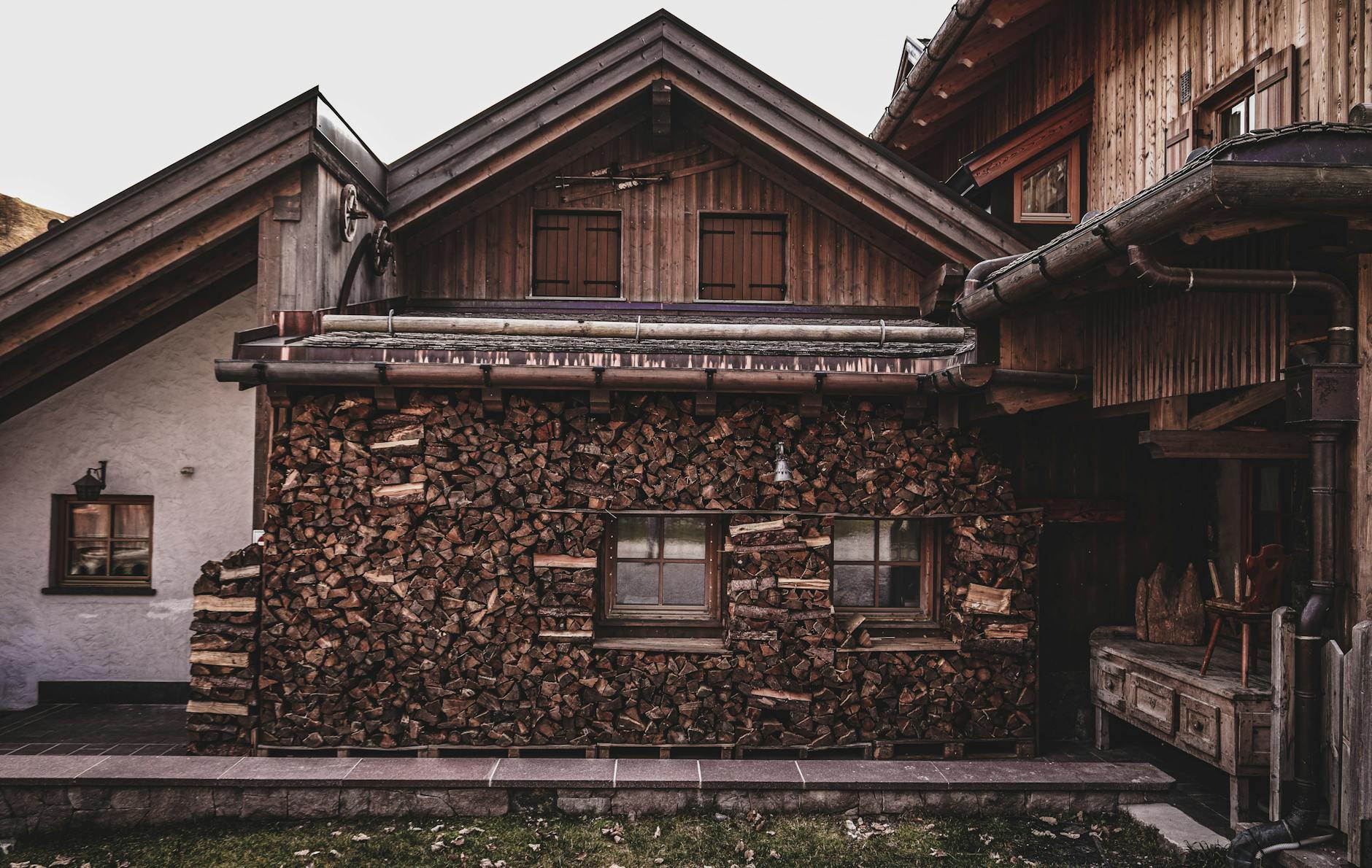
Log cabin insurance is a specialized form of homeowners coverage designed for homes built with log construction. These properties face risks that standard stick-frame houses do not. Fire hazards increase with exposed timber walls. Moisture can penetrate unsealed logs and cause hidden rot.
Replacement costs run significantly higher because rebuilding requires custom-milled timber and artisan labor. As a result, many standard carriers either charge higher premiums or decline coverage altogether. Understanding how log cabin insurance works helps owners avoid dangerous coverage gaps. Whether you own a primary log home or a seasonal retreat, the right policy protects your investment against the unique threats these beautiful structures face every day.
What Is Log Cabin Insurance?
Log cabin insurance is not a separate policy form. Instead, it refers to homeowners or dwelling fire coverage adapted for log construction. In most cases, insurers write these homes under a standard HO-3 Special Form policy. This provides open-peril coverage on the dwelling and named-peril coverage on personal property. However, underwriting requirements are stricter than for conventional homes.
For older log cabins where replacement cost far exceeds market value, carriers may use an HO-8 Modified Coverage Form. This pays claims on a functional replacement cost basis instead of full replacement cost. Some insurers also use DP-3 dwelling fire policies when standard HO forms are unavailable. Typically, DP-3 policies do not include liability coverage. Owners must add that separately.
The key difference with log cabin insurance is how carriers assess risk. Automated valuation tools often misprice log homes. Full-log construction costs more to rebuild than half-log systems that use conventional framing behind a log veneer. An independent agent experienced with log homes can help ensure accurate dwelling coverage limits.
What Does Log Cabin Insurance Cover?
A properly written log cabin insurance policy covers the same core perils as standard homeowners insurance. This includes fire, lightning, windstorm, hail, theft, and vandalism. It also covers liability if someone is injured on your property. However, the dwelling coverage amount must reflect the true cost of rebuilding with log materials. For example, custom-milled logs and specialized chinking labor cost far more than standard dimensional lumber.
The table below compares typical coverage between standard homeowners and log cabin insurance policies:
| Coverage Area | Standard HO-3 | Log Cabin HO-3 / DP-3 |
|---|---|---|
| Dwelling (Coverage A) | Based on standard construction costs | Must reflect custom timber and artisan labor costs |
| Fire Protection | Standard rates | Higher rates if remote or volunteer fire dept only |
| Replacement Cost | Accurate automated estimates | Often requires manual appraisal for accuracy |
| Vacancy Rules | 30-60 day limit | Stricter enforcement for seasonal cabins |
| Liability (Coverage E) | Included | Included in HO-3; must add separately with DP-3 |
| Personal Property | Named perils | Same, but lower limits common for vacation homes |
| Additional Living Expense | Included | May not apply if cabin is a secondary residence |
Getting an independent appraisal is essential. The National Association of Home Builders recommends that log home owners obtain a detailed replacement cost estimate before purchasing coverage.
What Log Cabin Insurance Does NOT Cover
Log cabin insurance excludes several risks that hit log homes harder than conventional houses. Insect damage tops the list. Termites, carpenter ants, and powder post beetles target exposed logs. However, no standard homeowners policy covers pest damage. Owners must pay for prevention and treatment out of pocket.
Rot and decay from deferred maintenance are also excluded. Insurers require log homes to be regularly stained, sealed, and chinked. If a claim investigation reveals failed maintenance, the carrier will deny payment. Settling is another common exclusion. Log homes naturally settle over time. This creates gaps between logs that allow air and water infiltration. Insurers classify this as gradual deterioration.
Flood damage requires a separate policy through the National Flood Insurance Program or a private flood insurer. Many log cabins sit near rivers or lakes. Mold damage is typically excluded or subject to low sublimits. As a result, log cabin owners should budget for these uncovered risks separately.
How Much Does Log Cabin Insurance Cost?
Log cabin insurance typically costs 20% or more above standard homeowners premiums for a comparable home. The national average for standard homeowners insurance runs roughly $2,400 to $2,900 per year. For example, a $400,000 log home might cost around $2,500 to $3,500 annually to insure. However, rates vary widely based on location and fire protection.
Several factors unique to log homes drive costs higher. Distance to the nearest fire station matters significantly. Homes more than five miles from a staffed station face surcharges. Volunteer-only fire departments also increase premiums. The construction method affects pricing too. Full-log homes cost more to insure than half-log or log-veneer systems. Age and condition play a major role as well.
According to the NAIC, fire protection class is one of the strongest rating factors for any homeowners policy. Log cabin owners in rural areas often fall into protection classes 8 through 10. These classes carry the highest surcharges. In most cases, installing fire suppression systems or maintaining defensible space around the home can help reduce premiums.
How to Find the Best Log Cabin Insurance
Finding the right log cabin insurance starts with using an independent insurance agent. Captive agents represent only one carrier. Independent agents can shop specialty markets that standard carriers do not access. This matters because many mainstream insurers decline log construction or price it unfavorably.
Specialty carriers like Foremost Insurance and American Modern specifically underwrite non-standard homes including log cabins. Major carriers such as State Farm, American Family, and Erie Insurance also write log cabin insurance when the home meets their underwriting criteria. For military families, USAA offers coverage for log homes as well.
When comparing policies, focus on replacement cost accuracy above all else. Request a guaranteed replacement cost endorsement if available. Verify that the carrier understands the difference between full-log and half-log construction. Ask about maintenance requirements in the policy conditions. Finally, compare deductibles carefully. Some carriers impose higher deductibles for log homes. Getting at least three quotes ensures you find competitive log cabin insurance that actually covers your rebuilding costs.
Frequently Asked Questions
Is log cabin insurance more expensive than regular homeowners insurance?
Yes, log cabin insurance typically costs 20% or more above standard homeowners rates. However, the exact premium depends on location, fire protection class, and construction type. Homes near staffed fire stations with modern fire suppression may see smaller surcharges.
Can I get a standard HO-3 policy for my log cabin?
In most cases, yes. Many carriers write log homes on standard HO-3 policies if the home is a primary residence in good condition. However, older or remote cabins may require an HO-8 or DP-3 policy instead. An independent agent can help determine which form fits your situation.
Does log cabin insurance cover termite or insect damage?
No. Insect damage is universally excluded from homeowners insurance policies. This applies to log cabin insurance as well as standard coverage. As a result, log home owners should invest in regular pest inspections and preventive treatments to protect their investment.
Compare Home Insurance Rates
Ready to see if you could be paying less for homeowners insurance? Compare quotes from top insurers in your area. Getting multiple quotes is the most effective way to find a better rate.
(paid link)
Official Sources & Resources
For verified information on home insurance regulations and consumer protection:
- NAIC (National Association of Insurance Commissioners): naic.org
- Insurance Information Institute: iii.org
- FEMA (Federal Emergency Management Agency): fema.gov
- FloodSmart (National Flood Insurance Program): floodsmart.gov
- USA.gov — Housing: usa.gov/housing
Content last reviewed April 2026. If you notice any outdated information, please contact us.