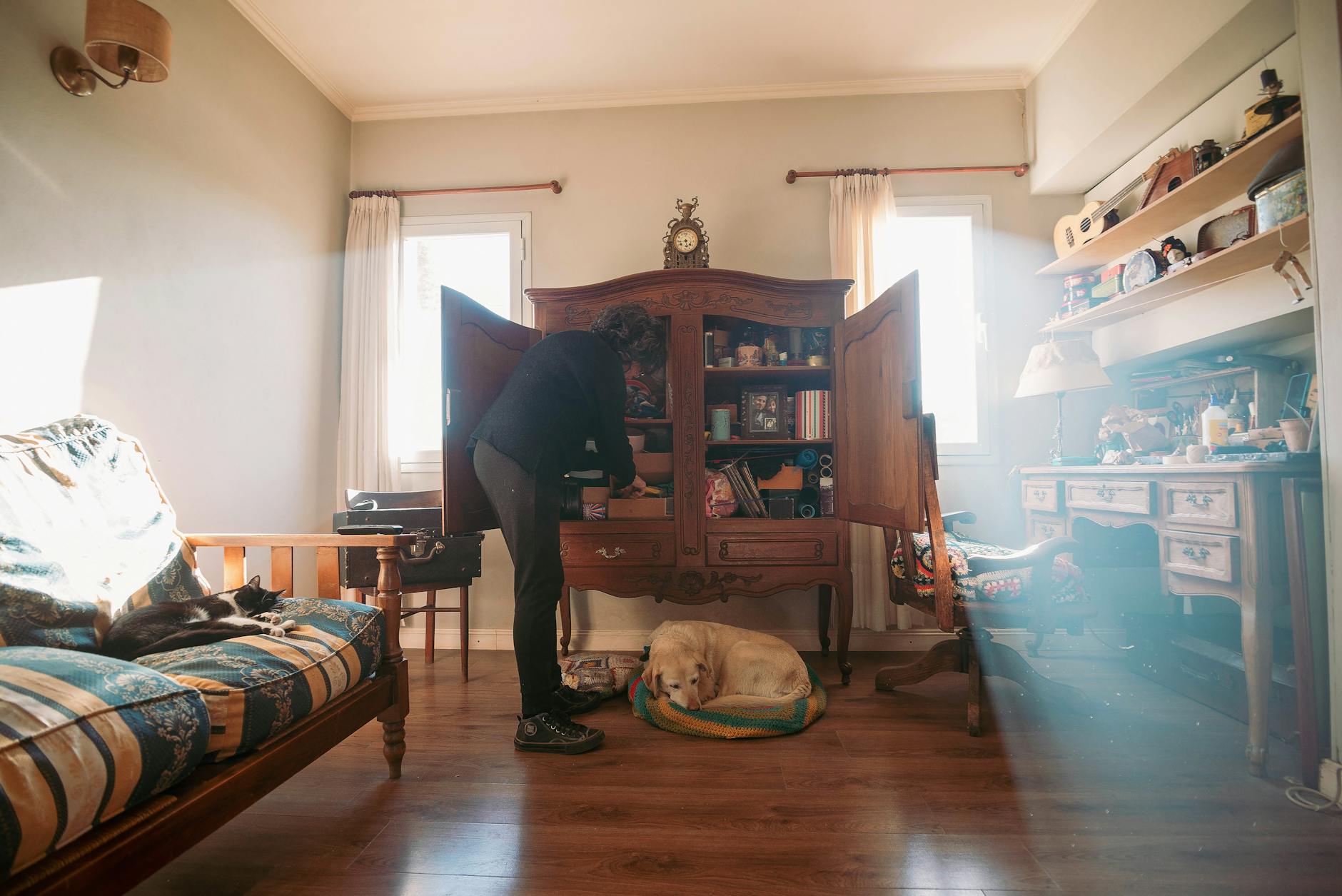
Personal property coverage is one of the most important parts of a standard homeowners insurance policy. Known as Coverage C, it protects the belongings inside your home. This includes furniture, clothing, electronics, and appliances. However, many homeowners underestimate how much coverage they actually need. A single house fire or burglary can destroy tens of thousands of dollars in possessions.
According to the Insurance Information Institute (III), personal property coverage typically equals 50% to 70% of your dwelling coverage amount. For example, if your home is insured for $300,000, your belongings may be covered for $150,000 to $210,000. Understanding how this coverage works helps you avoid costly gaps after a loss. It also helps you decide whether your current limits are enough to replace what you own.
What Is Personal Property Coverage?
Personal property coverage is the section of your homeowners policy that pays to repair or replace your belongings. It is labeled Coverage C on most HO-3 policies. This coverage applies whether your items are damaged, destroyed, or stolen. It protects possessions both inside your home and away from it. For example, a laptop stolen from your car may be covered.
Most standard HO-3 policies cover personal property on a named-perils basis. This means your belongings are only protected against 16 specific causes of loss. These include fire, lightning, theft, vandalism, and windstorm. In most cases, the dwelling itself (Coverage A) has broader open-perils protection. However, your personal belongings face a narrower set of covered events.
Your policy typically sets the personal property coverage limit automatically. Insurers usually default to 50% of your Coverage A amount. You can often increase this to 70% for an additional premium. As a result, reviewing your limit each year is a smart habit.
What Does Personal Property Coverage Cover?
Personal property coverage protects most household items you own or use. This includes furniture, clothing, kitchen appliances, and electronics. Sporting goods, books, and tools are also included. Typically, coverage extends to items stored in garages, sheds, or off-site storage units as well.
The 16 named perils covered under a standard HO-3 policy are listed below. Each peril must be the direct cause of the loss for a claim to be valid.
| Covered Peril | Example of Covered Loss |
|---|---|
| Fire or lightning | Living room furniture destroyed in a house fire |
| Windstorm or hail | Broken window allows rain to damage electronics |
| Theft | Jewelry stolen during a break-in |
| Vandalism | Intruder slashes furniture and smashes TV |
| Explosion | Gas leak explosion damages kitchen appliances |
| Smoke damage | Smoke from a nearby fire ruins clothing and curtains |
| Volcanic eruption | Ash damages outdoor equipment and stored items |
| Falling objects | Tree limb crashes through roof and destroys a desk |
| Weight of ice, snow, or sleet | Collapsed ceiling damages furniture below |
| Water overflow (accidental) | Burst pipe soaks bedroom belongings |
However, high-value items face sub-limits even within your total coverage. For example, cash is limited to $200–$300. Jewelry and watches have a theft sub-limit of $1,500–$2,000. Firearms are capped at $2,500–$3,000 for theft losses. Silverware theft is also limited to $2,500–$3,000. To fully protect expensive items, you may need a scheduled personal property endorsement.
What Personal Property Coverage Does NOT Cover
Personal property coverage has important exclusions every homeowner should know. Flood damage is never covered under a standard policy. You need a separate policy through the National Flood Insurance Program (NFIP) or a private insurer. Earthquake damage is also excluded unless you purchase a separate endorsement.
Normal wear and tear is not covered. Gradual deterioration, rust, and mold from neglect are excluded too. Damage caused by pests such as termites, rodents, or insects falls outside coverage. Intentional damage by the policyholder is always excluded. In most cases, damage from war or nuclear hazards is also not covered.
Motor vehicles, aircraft, and most motorized equipment are excluded from personal property coverage. Business equipment used at home may have limited or no protection. Typically, business property is capped at $2,500 under a standard policy. If you work from home, consider a separate business property endorsement.
How Much Personal Property Coverage Do You Need?
Determining the right amount of personal property coverage starts with a home inventory. Walk through every room and document what you own. Record item descriptions, estimated values, and purchase dates. The National Association of Insurance Commissioners (NAIC) recommends keeping photos or video of all belongings.
Most homeowners are surprised by their total. A typical household owns $50,000 to $100,000 in personal property. However, many default policy limits may not be enough. For example, a $200,000 dwelling policy provides only $100,000 in personal property coverage at the 50% default. If your inventory exceeds that, you should increase your limit.
You should also choose between actual cash value (ACV) and replacement cost coverage. ACV pays the depreciated value of your items. A five-year-old laptop worth $1,000 new might only pay $400 under ACV. Replacement cost coverage pays to buy a new equivalent item at today’s prices. It costs more in premium but provides significantly better protection. As a result, most insurance experts recommend replacement cost for personal property coverage.
How to File a Personal Property Coverage Claim
Filing a personal property coverage claim requires prompt action. Contact your insurance company immediately after discovering the loss. You will receive a claim number and initial instructions. If theft or vandalism occurred, file a police report first. Your insurer will likely require the report number.
Next, document all damage thoroughly. Take photos and videos of every affected item. Do not throw anything away until the adjuster has inspected it. Create a detailed list of damaged or stolen items. Include descriptions, approximate values, and purchase receipts if available. For example, bank statements or online order confirmations can serve as proof.
Make temporary repairs to prevent further damage. Save all receipts for these emergency repairs. Your policy typically reimburses reasonable mitigation costs. Complete all claim forms promptly when your insurer sends them. Cooperate fully with the adjuster during their inspection. Most policies require you to file within one year of the loss event. Delays can result in a denied claim.
Frequently Asked Questions
Does personal property coverage protect my belongings away from home?
Yes, in most cases your belongings are covered even when away from your property. However, off-premises coverage is typically limited to 10% of your total Coverage C amount. For example, if your limit is $150,000, you would have $15,000 in protection for items stolen from a hotel room or car.
Is personal property coverage the same as renters insurance?
They are very similar. Renters insurance (HO-4 policy) provides personal property coverage without dwelling protection. Homeowners get personal property coverage as part of their broader HO-3 policy. Typically, both cover the same 16 named perils for belongings.
How do I cover expensive jewelry or art beyond the sub-limits?
You should purchase a scheduled personal property endorsement, also called a floater. This removes the standard sub-limits for specific high-value items. For example, a $10,000 engagement ring exceeds the $1,500–$2,000 jewelry sub-limit. A floater covers the full appraised value and often includes accidental loss.
What is the difference between open-perils and named-perils personal property coverage?
Named-perils coverage only pays for the 16 specific causes listed in your policy. Open-perils coverage protects against all causes of loss except those specifically excluded. You can upgrade personal property coverage to open-perils with an HO-5 policy. However, this upgrade increases your annual premium.
Compare Home Insurance Rates
Ready to see if you could be paying less for homeowners insurance? Compare quotes from top insurers in your area. Getting multiple quotes is the most effective way to find a better rate.
(paid link)
Official Sources & Resources
For verified information on home insurance regulations and consumer protection:
- NAIC (National Association of Insurance Commissioners): naic.org
- Insurance Information Institute: iii.org
- FEMA (Federal Emergency Management Agency): fema.gov
- FloodSmart (National Flood Insurance Program): floodsmart.gov
- USA.gov — Housing: usa.gov/housing
Content last reviewed April 2026. If you notice any outdated information, please contact us.