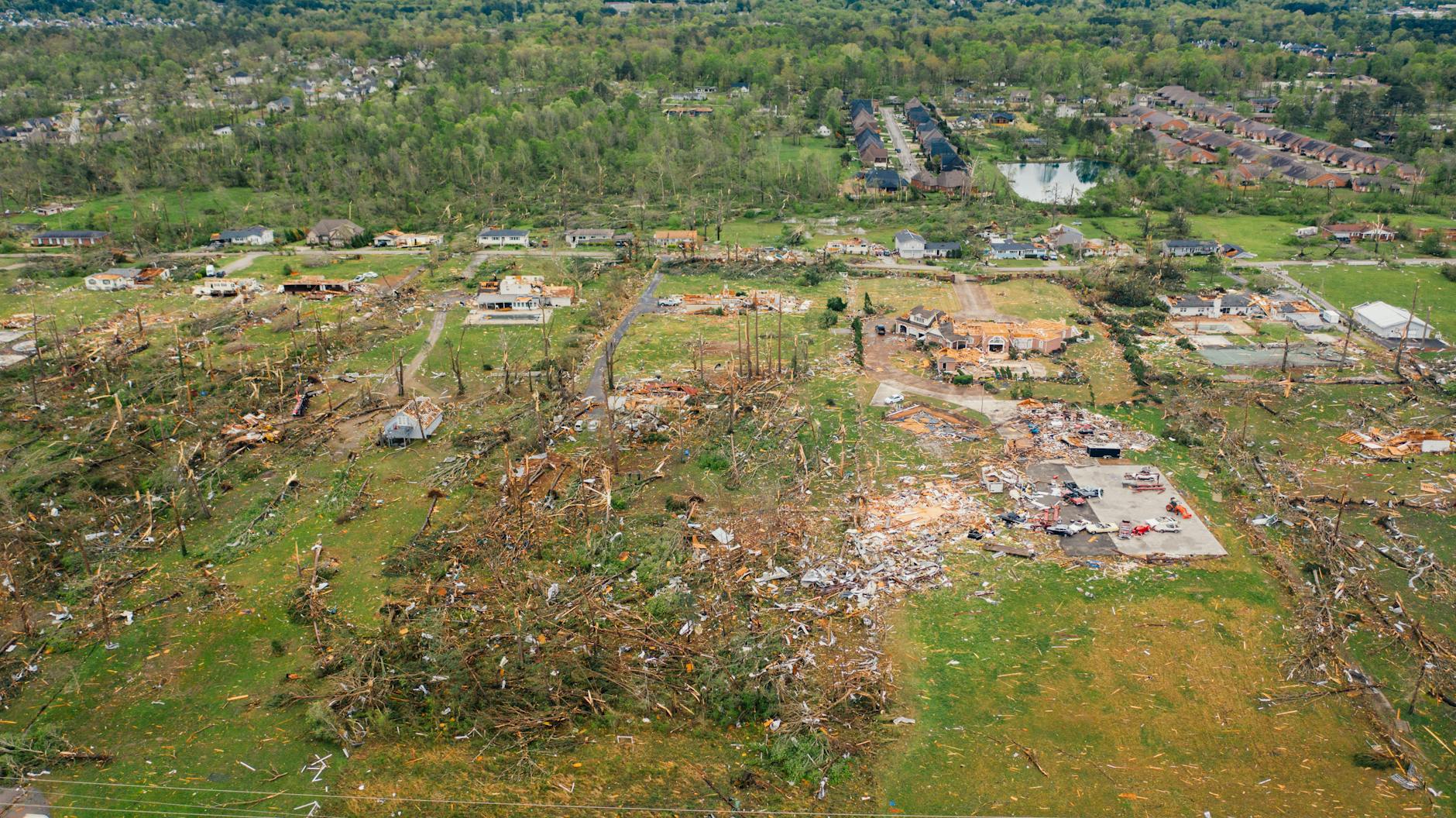
Tornado alley home insurance is essential for homeowners living in America’s most storm-prone corridor. Each year, the United States experiences roughly 1,000 tornadoes on average. However, 2024 saw 1,796 confirmed tornadoes — the second-highest count on record. The traditional Tornado Alley stretches from north Texas through Oklahoma, Kansas, Nebraska, South Dakota, and Iowa. As a result, homeowners in these states face significantly higher insurance costs.
The national average home insurance premium sits near $2,543 per year. In contrast, Oklahoma homeowners pay around $4,695 annually. Nebraska residents face premiums exceeding $5,900. These numbers highlight a harsh reality. Standard coverage may not be enough when a tornado strikes your neighborhood.
Understanding the Risk: Tornado Alley Home Insurance
Tornado Alley is not a fixed boundary. Research from NOAA’s Storm Prediction Center shows the danger zone is expanding eastward. States like Mississippi, Alabama, Tennessee, and Arkansas now form what meteorologists call “Dixie Alley.” In 2025, Texas led the nation with 162 tornadoes. Illinois, Missouri, Mississippi, and Alabama rounded out the top five. Tornado activity now spans almost everything east of the Rockies.
The financial toll is staggering. According to Swiss Re Institute, severe convective storms caused $42 billion in U.S. insured losses through September 2025. In 2023, those losses hit $55 billion — a record at the time. Tornadoes alone cause an average of 80 deaths and 1,500 injuries per year. For example, the first EF-5 tornado in 12 years struck in 2025. Understanding tornado alley home insurance starts with understanding this escalating risk.
The FEMA National Risk Index provides county-level tornado frequency data. It uses 34 years of records from the Storm Prediction Center. Homeowners can check their exact risk level by ZIP code. This tool is invaluable when shopping for tornado alley home insurance coverage.
What Standard Homeowners Insurance Covers (and Doesn’t)
A standard HO-3 homeowners policy does cover most tornado damage. Your dwelling coverage (Coverage A) pays for structural damage like collapsed walls or a torn-off roof. Personal property coverage replaces destroyed furniture, clothing, and electronics. Other structures coverage protects detached garages, fences, and sheds. Loss of use coverage pays for temporary housing if your home becomes uninhabitable. In most cases, wind damage from tornadoes falls under these standard protections.
However, there are critical gaps. Flood damage from tornado-associated rain requires a separate policy through the National Flood Insurance Program (NFIP) or a private flood insurer. Rain entering through a wind-damaged roof is covered. Ground-level flooding is not. Additionally, some policies in high-risk areas now exclude wind damage entirely. Others impose separate, much higher wind and hail deductibles.
These wind and hail deductibles are a major concern for tornado alley home insurance policyholders. Unlike flat deductibles of $1,000 or $2,500, many carriers now use percentage-based deductibles. Typically, these range from 1% to 5% of your dwelling coverage. For example, a 2% deductible on a $400,000 home means $8,000 out of pocket per wind claim. According to the Insurance Information Institute, percentage deductibles are now standard across most Tornado Alley states.
Additional Coverage Options for Tornado Alley Home Insurance
Homeowners in tornado-prone states have several options beyond standard coverage. Extended replacement cost coverage pays 25% to 50% above your dwelling limit. This helps when construction costs spike after a major tornado event. Guaranteed replacement cost goes even further. It covers the full rebuild cost regardless of your policy limit. For tornado alley home insurance, these endorsements provide critical financial protection.
Some states offer specialized programs for homeowners who cannot find private market coverage. The Texas Windstorm Insurance Association (TWIA) covers 14 first-tier coastal counties. The Texas FAIR Plan Association provides basic property insurance statewide. Mississippi operates a Windstorm Underwriting Association for last-resort wind coverage. However, Oklahoma, Kansas, and Nebraska do not have dedicated wind pool programs.
| Coverage Type | What It Covers | Typical Cost | Best For |
|---|---|---|---|
| Standard HO-3 | Wind, structural damage, personal property | $2,500–$6,000/year | All homeowners |
| Extended Replacement Cost | 25–50% above dwelling limit | $100–$300/year add-on | Rising construction costs |
| Guaranteed Replacement Cost | Full rebuild regardless of limit | $200–$500/year add-on | High-value homes |
| Separate Flood Policy (NFIP) | Ground-level water damage | $700–$1,500/year | Flood-prone areas |
| Scheduled Personal Property | High-value items at full value | $50–$200/year per item | Jewelry, electronics, art |
| State FAIR Plan / Wind Pool | Basic property or wind-only coverage | Varies by state | Last-resort coverage |
How Much Does Tornado Alley Home Insurance Cost?
Tornado alley home insurance premiums far exceed the national average. According to Bankrate, Nebraska leads at roughly $5,912 per year. Oklahoma follows at $4,695. Kansas averages $4,444 annually. Texas homeowners pay approximately $4,915. Colorado sits at $3,412. These figures represent $2,000 or more above the national average of $2,543. As a result, tornado alley home insurance consumes a larger share of household income.
LendingTree research found that Oklahoma homeowners spend 6.84% of their household income on insurance. Nebraska residents spend 5.73%. Kansas homeowners spend 5.58%. These percentages are among the highest in the nation. Premiums are also rising fast. Minnesota saw a 34% increase in the past year. Colorado premiums jumped 33%. Iowa rose 28%, Nebraska 25%, and Oklahoma 24%.
Several factors drive these costs. Roof age is critical — homes with roofs over 15 years old face surcharges or coverage denials. Claims history matters significantly. In Illinois, one claim raises annual premiums by nearly $500. Construction material costs have surged nationwide. Reinsurance market tightening also pushes costs to consumers. Typically, your ZIP code is the single biggest factor in determining your tornado alley home insurance premium.
How to Reduce Your Risk and Lower Premiums
The FORTIFIED Home program from the Insurance Institute for Business and Home Safety (IBHS) offers the most proven path to savings. FORTIFIED certification comes in three levels: Roof, Silver, and Gold. The Roof designation requires a sealed roof deck, locked-down edges, and impact-resistant shingles. Silver adds chimney bracing and impact-rated garage doors. Gold provides full structural tie-together. In Alabama, FORTIFIED homes earn 20% to 55% off wind premiums. Mississippi offers up to 55% off. Oklahoma provides up to 42% off tornado alley home insurance costs.
Oklahoma’s Strengthen Oklahoma Homes grant program offers up to $10,000 for tornado mitigation upgrades. The program opened statewide in January 2026 across all 77 counties. Eligibility requires owner-occupancy, a homestead exemption, and active homeowner’s insurance with wind coverage. Results show damage reduction of up to 80%. Premium savings typically range from 20% to 30%. The program completed its 100th home by December 2025.
Additional mitigation steps can lower your tornado alley home insurance costs. Install impact-resistant roofing materials rated for your wind zone. Reinforce garage doors — they are the most common failure point during tornadoes. Add storm shutters or impact-resistant windows. Build or retrofit a safe room meeting FEMA P-320 or P-361 standards. Raise your wind deductible strategically to lower premiums. Bundle home and auto policies for multi-policy discounts. Review your coverage annually as replacement costs change.
Frequently Asked Questions
Does standard homeowners insurance cover tornado damage?
In most cases, yes. A standard HO-3 policy covers wind damage to your home’s structure, personal property, and other structures. However, flooding caused by tornado-associated rain requires a separate flood policy. Percentage-based wind deductibles may also leave you with significant out-of-pocket costs after a tornado alley home insurance claim.
Which states have the highest tornado alley home insurance premiums?
Nebraska leads at approximately $5,912 per year. Oklahoma and Texas follow at roughly $4,695 and $4,915 respectively. Kansas averages $4,444 annually. For example, these states all exceed the national average by $2,000 or more due to severe storm frequency.
How can I lower my tornado alley home insurance costs?
The most effective strategy is FORTIFIED Home certification through IBHS. Typically, this earns discounts of 20% to 55% on the wind portion of your premium. Additionally, Oklahoma residents can apply for grants up to $10,000 through the Strengthen Oklahoma Homes program. Upgrading your roof, reinforcing garage doors, and raising your wind deductible also help reduce costs.
Compare Home Insurance Rates
Ready to see if you could be paying less for homeowners insurance? Compare quotes from top insurers in your area. Getting multiple quotes is the most effective way to find a better rate.
(paid link)
Official Sources & Resources
For verified information on home insurance regulations and consumer protection:
- NAIC (National Association of Insurance Commissioners): naic.org
- Insurance Information Institute: iii.org
- FEMA (Federal Emergency Management Agency): fema.gov
- FloodSmart (National Flood Insurance Program): floodsmart.gov
- USA.gov — Housing: usa.gov/housing
Content last reviewed April 2026. If you notice any outdated information, please contact us.