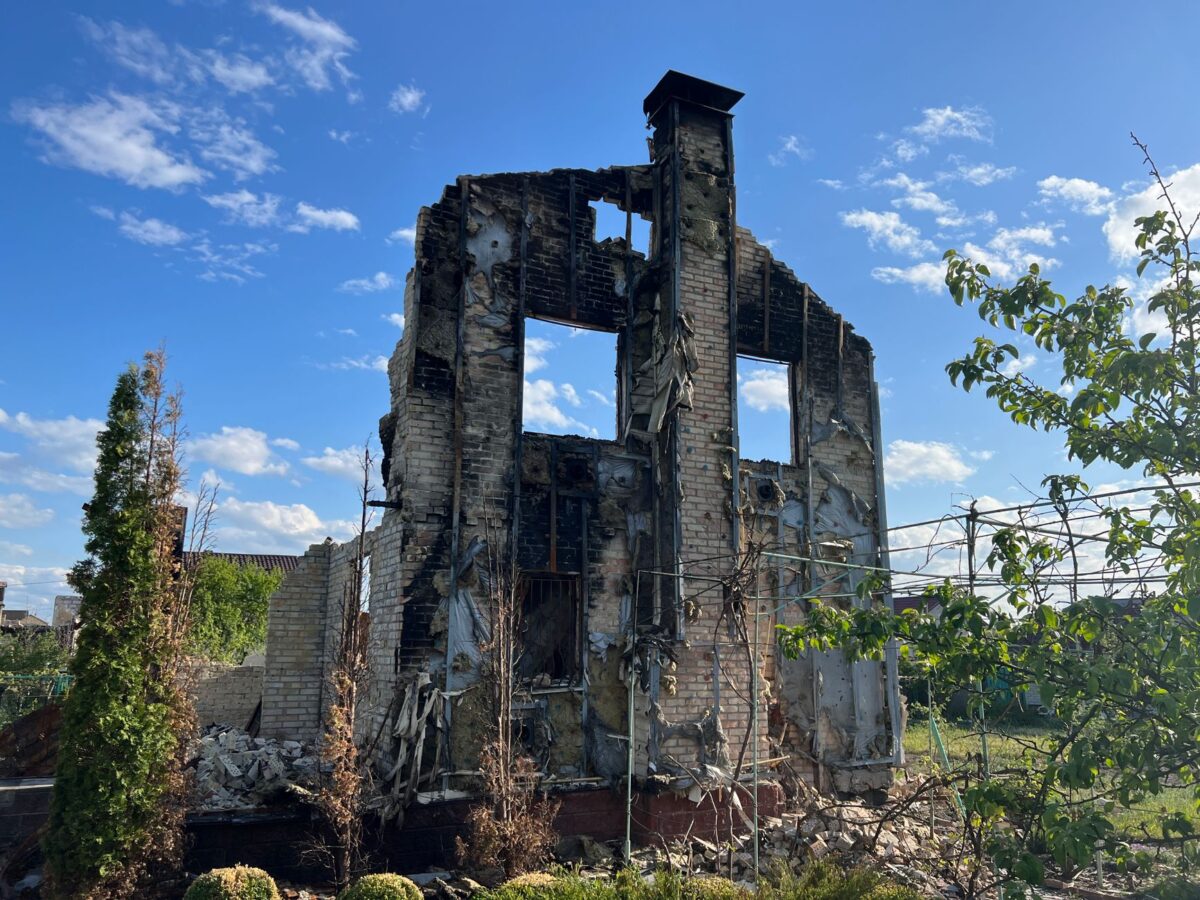
A house fire insurance claim is one of the largest and most document-heavy claims a homeowner will ever file. You are likely dealing with temporary housing, a burned or smoke-damaged structure, and an adjuster asking for lists you do not have. This guide walks through the process in order: what to report first, what your policy actually pays, how the money arrives in stages, and where the deadlines come from.
It also explains why one deadline buried in your policy can matter more than your state’s statute of limitations. A house fire insurance claim is won on documentation and timing, not on argument. The goal here is to give you concrete steps you can take this week, in the order they matter.
What “House Fire Insurance Claim” Means for Your Claim
A house fire insurance claim usually splits into three separate buckets of money. The first is dwelling coverage, which pays to repair or rebuild the structure. The second is contents or personal property, which covers what was inside. The third is loss of use, also called additional living expenses (ALE). ALE reimburses hotel bills, temporary rent, increased food costs, and extra mileage while your home is uninhabitable.
These buckets have separate limits and separate proof requirements. For example, ALE is typically a percentage of your dwelling limit, often around 10 to 20 percent. Each bucket is adjusted on its own timeline. As a result, contents can stay unresolved for months after the structure is settled.
Valuation matters just as much. In most cases, the insurer first pays actual cash value (ACV), which is replacement cost minus depreciation. The withheld amount, called recoverable depreciation or holdback, is typically released after you actually repair or replace the items. If your policy is ACV-only, that holdback is never released. Read your declarations page and confirm which one you have before you plan a rebuild budget.
The Step-by-Step Process
Work the house fire insurance claim in sequence. First, report the loss to your insurer and get a claim number. Second, ask in writing for your ALE limit and the reimbursement procedure. Third, request a complete certified copy of your policy, not just the declarations page. Fourth, photograph and video everything before any cleanup or demolition begins.
Then build the paper. Start a contents inventory room by room, listing item, brand, age, and replacement cost. Keep every receipt for lodging, meals, and mileage in one folder. Confirm every phone conversation with a short follow-up email. However, do not sign anything that releases the claim or accepts a final settlement until you understand the number.
| Step | What you do | What to keep | Typical timing |
|---|---|---|---|
| 1 | Report loss, get claim number | Adjuster name, phone, email | Immediately |
| 2 | Request full policy copy in writing | Dated email or letter | First week |
| 3 | Secure the property from further damage | Board-up and tarp invoices | First few days |
| 4 | Open ALE and track displacement costs | Hotel, rent, food, mileage receipts | Ongoing |
| 5 | Photograph damage before cleanup | Photos, video, fire report | Before demolition |
| 6 | Build room-by-room contents inventory | Spreadsheet with values | Weeks 2-8 |
| 7 | Submit sworn proof of loss if requested | Signed copy plus proof of delivery | Set by policy, often 60 days |
| 8 | Review estimate line by line | Insurer’s scope and your contractor bid | After inspection |
| 9 | Claim recoverable depreciation | Final repair and purchase invoices | After work is done |
Deadlines and Why They Vary by State
There is no single national deadline for a house fire insurance claim. Prompt notice requirements, insurer acknowledgment windows, investigation periods, and bad faith standards are set state by state. Broadly, states require insurers to acknowledge a claim within roughly 10 to 30 days and to accept or deny within another 30 to 45 days, with written explanations required for delays. Your state’s exact numbers control. Check claim deadlines in your state before assuming any timeline applies to you.
The deadline that catches people is inside the policy itself. Most homeowners policies contain a “Suit Against Us” clause limiting how long you have to sue the insurer, commonly one or two years from the date of loss. That contractual period is often shorter than your state’s statute of limitations for breach of contract. In many states the shorter policy clause controls, though some states restrict or prohibit shortening it.
Two practical consequences follow. First, an open, friendly negotiation does not pause that clock in most states. Second, a house fire insurance claim that drags for eighteen months can quietly run out of time while you are still exchanging estimates. Find the clause in your policy now, write the date on your file, and ask a licensed attorney in your state if you are anywhere near it.
Common Mistakes That Cost People Money
The most expensive mistake is throwing away damaged property before it is documented and the adjuster has inspected. Once it is gone, the burden of proving what you owned falls entirely on you. Photograph everything, and keep smoke-damaged items in a garage or storage unit until you have written permission to dispose of them.
The second is an incomplete contents inventory. Insurers typically pay from the list you provide. For example, a partially built list of 300 items when you actually lost 900 quietly costs you the difference. Work in short sessions, room by room, and use old photos, credit card statements, and delivery emails to reconstruct what was there.
Other common errors: missing the sworn proof of loss deadline, treating the first check as a final settlement when it is often an advance, failing to submit invoices to release recoverable depreciation, and letting ALE receipts pile up unsubmitted. Accepting an estimate without comparing it line by line against an independent contractor’s bid also reduces many payouts on a house fire insurance claim.
🏠 Get Free Home Insurance Guides
Free · No spam · Unsubscribe anytime
When to Escalate — Adjusters, Complaints and Attorneys
A licensed public adjuster works for you rather than the insurer and typically charges a percentage of the settlement. They can be worth it on a large or total loss where the inventory and rebuild scope are overwhelming. However, fees vary and some states cap them, so verify the license with your state department of insurance and read the contract before signing.
If you and the insurer disagree on the amount rather than on coverage, check your policy for an appraisal clause. Appraisal is a valuation process where each side names an appraiser and an umpire resolves the difference. It is usually faster than litigation. It does not resolve disputes about whether damage is covered at all.
You can also file a complaint with your state department of insurance, which enforces prompt-payment and unfair claims practices rules. Consult a licensed attorney in your state when coverage is denied, when the insurer alleges misrepresentation or arson, when you are near the suit-limitation date, or when a house fire insurance claim stalls without written explanation. This guide explains process only and is not legal advice. See all claims and disputes guides for related topics.
Frequently Asked Questions
How long does a house fire insurance claim take to settle?
It varies widely by state law, policy terms, and loss size. Partial losses often resolve in weeks, while total losses typically take many months or longer. As a result, plan your ALE budget for a long timeline rather than a short one.
Will my insurer pay for a hotel right away?
In most cases, yes, if your home is uninhabitable and you have loss of use coverage. Ask for an ALE advance in writing and keep every receipt. However, ALE has both dollar and time limits, so confirm both early.
Can I still file if I waited weeks to report the fire?
Possibly, but policies require prompt notice and late reporting can create a dispute. Report it now in writing rather than waiting longer. Then ask a licensed attorney in your state whether the delay affects your rights.
Compare Home Insurance Rates
Ready to see if you could be paying less for homeowners insurance? Compare quotes from top insurers in your area. Getting multiple quotes is the most effective way to find a better rate.
(paid link)
Official Sources & Resources
For verified information on home insurance regulations and consumer protection:
- NAIC (National Association of Insurance Commissioners): naic.org
- Insurance Information Institute: iii.org
- FEMA (Federal Emergency Management Agency): fema.gov
- FloodSmart (National Flood Insurance Program): floodsmart.gov
- USA.gov — Housing: usa.gov/housing
Content last reviewed August 2026. If you notice any outdated information, please contact us.